

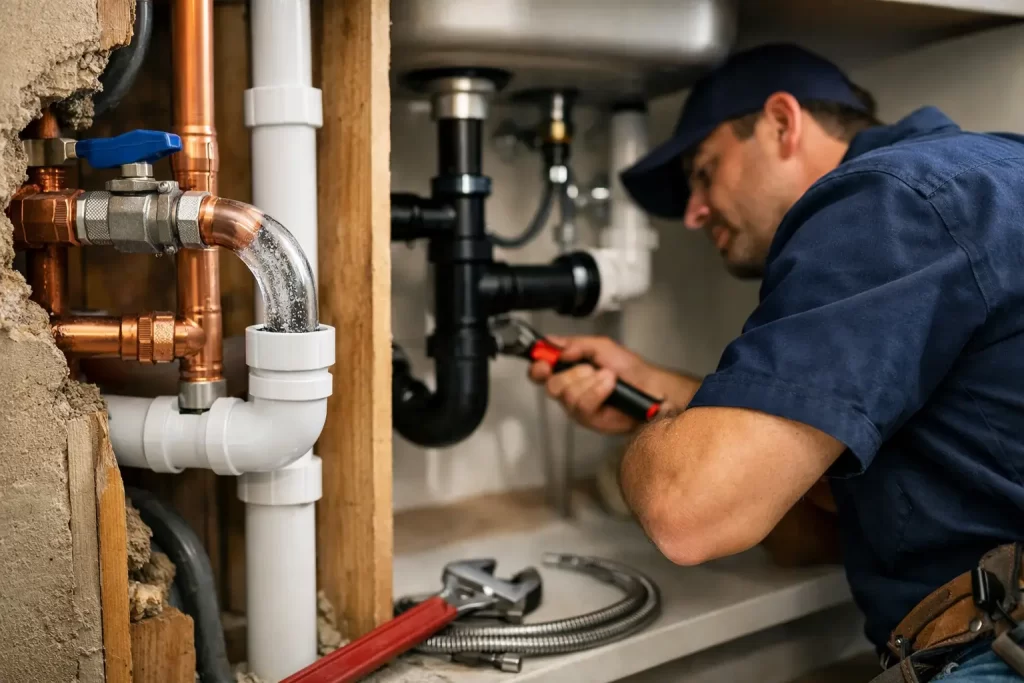
A plumbing problem rarely starts with a dramatic burst pipe. More often, it begins with a slow drain, a toilet that runs longer than it should, or a drop in water pressure that seems easy to ignore. If you have ever wondered how does residential plumbing work, the short answer is that your home relies on two connected systems – one that brings clean water in under pressure, and another that carries wastewater safely out.
Once you understand those two sides, common plumbing issues make a lot more sense. You can see why a vent pipe matters, why one clog can affect more than one fixture, and why a small leak behind a wall can become expensive fast. For homeowners on Cape Cod and throughout southeastern Massachusetts, that knowledge also helps when dealing with older homes, winter weather, and aging infrastructure.
How does residential plumbing work in a typical home?
Residential plumbing is built around distribution and removal. Fresh water enters the home from a municipal water main or a private well. That water moves through supply pipes to fixtures and appliances like sinks, showers, toilets, dishwashers, and washing machines.
At the same time, a separate drain-waste-vent system removes used water and sewage. Unlike supply pipes, drain lines are not pressurized. They rely mostly on gravity, proper pipe slope, and venting to move wastewater out to the sewer or septic system.
That split is what keeps your plumbing safe and sanitary. Clean water and dirty water travel through different paths, and the system is designed to prevent contamination, sewer gases, and backups inside the house.
The clean water side of the system
When water enters your home, it passes through a main shutoff valve. This is one of the most important components in the house because it lets you stop the flow during a leak, burst pipe, or fixture replacement. From there, water is routed through a network of pipes to different areas of the home.
Some of that water stays cold and travels directly to fixtures. The rest is sent to the water heater, where it is heated and then distributed through hot water lines. Every time you turn on a faucet, flush a toilet, or start a laundry cycle, you are opening a path for water that is already under pressure.
That pressure is what makes the system work efficiently, but it can also create wear over time. High pressure may feel great in the shower, yet it can be hard on pipes, valves, and appliance connections. Low pressure can point to a different problem, such as mineral buildup, a hidden leak, a failing pressure regulator, or corrosion in older piping.
Common supply pipe materials
The material in your plumbing depends on the age of the home and past upgrades. Older homes may still have galvanized steel or copper. Newer work often uses copper or PEX.
Each material has trade-offs. Copper is durable and proven, but it can cost more. PEX is flexible and efficient to install, but it must be used correctly and protected in certain applications. In older coastal homes, replacement decisions often come down to budget, accessibility, and how much of the original system remains.
Hot water: where comfort meets plumbing mechanics
Your water heater is the bridge between the cold water supply and the hot water side of the house. Tank water heaters store a set amount of heated water and refill as hot water is used. Tankless water heaters heat water on demand as it passes through the unit.
Both approaches work, but they serve homes differently. A tank system can be a practical fit for steady, predictable usage. A tankless system can save space and reduce standby energy loss, but the right sizing matters. If the unit is too small for the household’s peak demand, you may notice reduced performance when multiple fixtures are running.
Hot water systems also include shutoff valves, temperature controls, and safety devices. If your hot water suddenly turns rusty, runs out too fast, or starts making popping sounds, the issue may be sediment buildup, a failing heating element, or a tank nearing the end of its service life.
The drain side: how wastewater leaves your home
The second half of residential plumbing is less visible but just as important. Every sink, shower, tub, toilet, and appliance drain connects to a larger drainage system. Instead of pressure, this side depends on gravity and careful pipe layout.
When water goes down a drain, it flows through branch lines into larger drain pipes and eventually exits the home through the main sewer line or into a septic connection, depending on the property. Because gravity is doing most of the work, the slope of the pipe has to be correct. Too much slope can move water too quickly and leave solids behind. Too little slope can slow everything down and lead to recurring clogs.
This is one reason DIY drain modifications often create bigger issues than expected. What looks like a simple reroute under a sink can affect drainage speed, trap performance, and venting.
Why every drain has a trap
The curved section under many sinks is called a trap. Its job is simple but critical. It holds a small amount of water that seals off sewer gases from coming back into the home.
If a drain starts smelling bad, the trap may be dry, blocked, or part of a venting problem. In guest bathrooms or seasonal properties, traps can dry out if fixtures go unused for long periods. That is especially relevant in vacation homes and second properties, where plumbing sits idle more often.
Vent pipes do more than most homeowners realize
One of the most misunderstood parts of residential plumbing is the vent system. Plumbing vents extend through the roof and allow air into the drainage system. That airflow helps wastewater move freely and keeps traps from being siphoned dry.
Without proper venting, drains can gurgle, toilets can flush poorly, and sewer odors can show up indoors. A blocked vent can act a lot like a clog, even though the problem is actually airflow, not waste buildup.
This is where plumbing can be less intuitive than it looks. If one bathroom fixture has trouble, the issue may be local. If several fixtures in different parts of the home start draining poorly at the same time, the problem may involve a main drain or vent system.
What makes toilets, faucets, and shutoffs work
Fixtures are the parts of the plumbing system you use every day, but each one depends on small mechanical components that wear out over time. Faucets use cartridges, washers, or valves to control water flow. Toilets rely on fill valves, flappers, overflow tubes, and supply connections. Shutoff valves under sinks and behind toilets allow isolated repairs without turning water off to the whole house.
These parts are relatively small, yet failures here are common. A dripping faucet may waste water slowly for months. A leaking toilet supply line can become urgent with almost no warning. A seized shutoff valve may not be obvious until you need it during an emergency.
That is why plumbing inspections are not only about visible leaks. They are also about checking whether the system will respond properly when something goes wrong.
How does residential plumbing work when something fails?
Most plumbing failures fall into a few categories: leaks, clogs, corrosion, freezing, worn-out fixtures, or equipment breakdown. The challenge is that symptoms do not always appear where the real problem is.
For example, a stain on the ceiling may come from a bathroom line several feet away. A slow kitchen drain could be a local grease clog, or it could be part of a broader issue in the branch line. Low hot water pressure might point to a fixture problem, a water heater issue, or mineral buildup in the piping.
In colder months, frozen pipes are another concern. When water freezes, it expands. That expansion can crack pipes or fittings, especially in crawl spaces, exterior walls, or poorly insulated areas. Winterization matters in seasonal homes and in any property that may sit vacant during freezing weather.
When it makes sense to call a licensed plumber
Basic homeowner knowledge is useful, but residential plumbing is one of those systems where small mistakes can cause major property damage. Replacing a shower cartridge is one thing. Diagnosing repeated backups, hidden leaks, failing water heaters, or pipe damage behind walls is another.
A licensed plumber looks at the whole system, not just the visible symptom. That matters in older homes, homes with remodel history, and properties where plumbing has been patched over the years. It also matters when you need work done quickly. A responsive company with stocked trucks can often solve the issue on the first visit instead of stretching a repair into several days.
For homeowners who want reliable answers without guesswork, companies like Durfee Plumbing & Heating focus on exactly that kind of practical service – licensed work, fast response, and repairs that address the real cause, not just the immediate mess.
The best time to understand your plumbing is before it turns into an emergency. If you know where your shutoff valve is, how your drains and vents work, and what early warning signs to watch for, you are in a much better position to protect your home, your budget, and your peace of mind.