

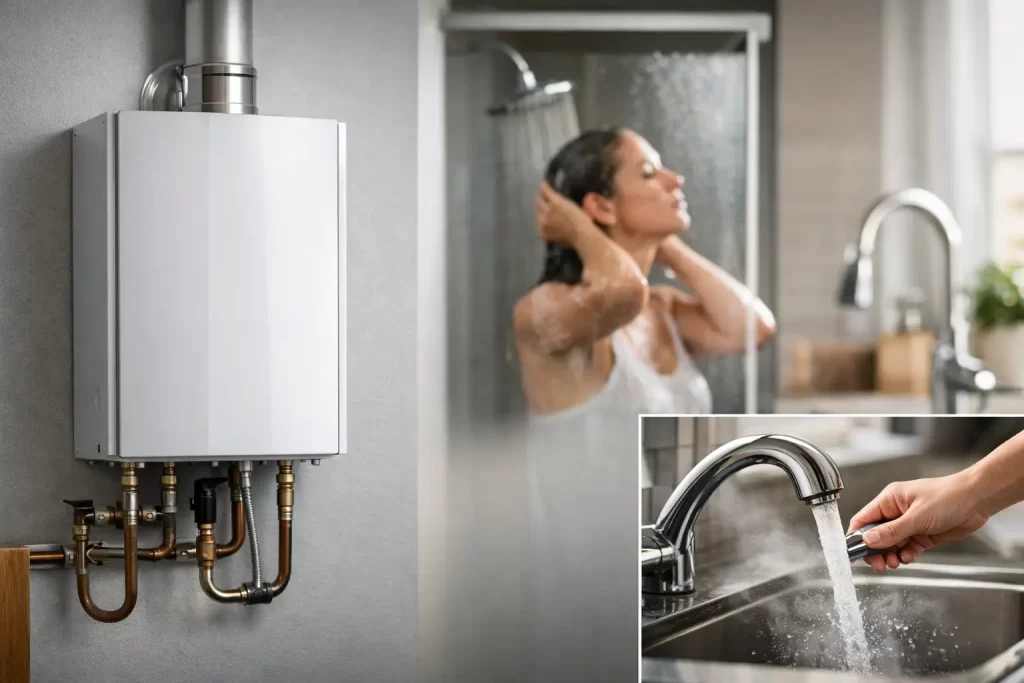
When a water heater starts failing, the problem usually shows up at the worst time – right before showers, laundry, dishes, or guest turnover in a busy rental. That is why many homeowners start looking at rinnia tankless water heaters after one cold-water surprise too many. The appeal is easy to understand: hot water on demand, less standby energy loss, and a smaller footprint than a bulky storage tank.
That said, a tankless unit is not automatically the right answer for every home. The best choice depends on your household size, your plumbing and gas setup, your hot water habits, and how long you plan to stay in the property. If you are weighing a replacement, it helps to know where tankless systems shine and where they require a little more planning.
How rinnia tankless water heaters work
A traditional tank water heater stores and reheats a set volume of water all day. A tankless system works differently. When you open a hot water tap, cold water moves through the unit and is heated as it passes through a heat exchanger. Instead of keeping 40 or 50 gallons hot around the clock, the system fires only when there is demand.
That operating style is what makes tankless equipment attractive to many property owners. You are not paying to maintain a reservoir of hot water when no one is using it. You also free up floor space, which matters in tight basements, utility closets, and smaller homes where every square foot counts.
For households with steady but moderate hot water use, the experience can be excellent. You can take longer showers without worrying about draining the tank. In homes with multiple simultaneous demands, though, performance comes down to sizing. A tankless heater must be matched to the required flow rate, not just installed because the concept sounds efficient.
Why homeowners consider tankless in the first place
Most people are not shopping for water heaters for fun. They are replacing an aging system, dealing with rising utility costs, or trying to improve reliability in a home that sees heavy use. Tankless models often come up because they promise a cleaner, more modern solution.
Energy efficiency is one reason. Since there is no stored tank of hot water losing heat between uses, tankless systems can reduce wasted energy. The savings vary by household. A couple in a year-round home may see one kind of return, while a larger family with back-to-back showers and laundry will see another. Usage patterns matter.
Longevity is another factor. A well-maintained tankless unit can last longer than many conventional tank systems. That does not mean maintenance can be ignored. In fact, regular flushing and inspection are a bigger part of ownership than some homeowners expect, especially in areas where mineral buildup can affect performance over time.
Then there is convenience. Endless hot water sounds like a luxury, but for many families it is simply practical. If your current tank struggles to keep up, tankless can feel like a real quality-of-life upgrade.
The trade-offs to know before you install one
The biggest trade-off is upfront cost. Tankless systems typically cost more than standard tank replacements, both for the unit itself and for installation. In some homes, the existing gas line may need to be upsized, venting may need to be changed, or electrical work may be required. Those are not minor details. They affect both project cost and installation time.
There is also a performance question. Tankless water heaters are rated by how many gallons per minute they can heat at a given temperature rise. If two showers, a dishwasher, and a washing machine are all running at once, an undersized unit may struggle. This is one of the main reasons professional sizing matters.
Another point homeowners notice is the delay. Tankless does not always mean instant hot water at the tap. The system begins heating water quickly, but water still has to travel through the plumbing lines. Some owners expect immediate hot water everywhere and are disappointed when that is not how the house piping works.
Maintenance is the other major consideration. These units benefit from periodic descaling and service to protect efficiency and extend equipment life. If you want a water heater you can mostly forget about until it fails, a tankless system may require more attention than you prefer.
When rinnia tankless water heaters make sense
Tankless often makes sense when space is limited, hot water demand is consistent, and the homeowner plans to stay in the property long enough to benefit from energy savings and longer equipment life. They are also a strong option when a home already has the gas capacity and venting setup needed to support the installation.
In Cape Cod homes, this can be especially relevant for households managing seasonal occupancy swings. Some properties sit quiet for stretches and then see sharp bursts of use during the busy season. A tankless system can be appealing in that kind of pattern because it does not keep a full tank hot during lower-use periods.
For rentals and guest-heavy homes, the appeal is obvious – fewer complaints about running out of hot water. But even here, sizing is everything. If the home has several bathrooms and frequent overlapping demand, a single small unit may not be enough. Sometimes the better answer is a larger tankless model, multiple units, or a different water heating strategy altogether.
When a traditional tank may still be better
A standard tank water heater can still be the smarter move in some situations. If the goal is the lowest upfront cost, tank systems usually win. If the home’s infrastructure would need major upgrades to support tankless, the return may not pencil out the way you hoped.
Tank systems can also be a practical fit for households with predictable, moderate usage and no real frustration with recovery time. If your current complaint is simply that the old unit is leaking or nearing the end of its life, a like-for-like replacement may solve the problem without adding complexity.
This is especially true for homeowners planning to move soon. A tankless system can add value and efficiency, but the payoff is often strongest over time. If you may sell the property in the near future, a lower-cost replacement can be the more sensible option.
Installation matters as much as the equipment
Even the best unit will disappoint if it is installed incorrectly or sized without real attention to the home. Proper tankless installation starts with load calculations, fixture count, flow rate planning, venting requirements, gas supply review, and a clear understanding of how the home actually uses hot water.
That is why this is not a good place to guess. A professional installer should evaluate not just the old water heater, but the larger system around it. Is the incoming gas supply adequate? Will the venting meet code? Is the mounting location suitable? Are there water quality concerns that may affect maintenance needs? Those questions shape long-term performance.
For homeowners and property managers, this is where working with a licensed local contractor matters. On older homes in particular, what looks simple at first glance can turn into a more involved retrofit once the existing setup is opened up.
What to expect on cost and value
Tankless installations usually cost more at the start than standard tank replacements. That is the honest answer. The final number depends on unit capacity, venting, fuel source, labor, code upgrades, and whether any supporting plumbing or gas work is needed.
Where tankless can make up ground is over the long haul. Lower standby losses, longer service life, and reduced risk of running out of hot water all carry value. Some households will see stronger savings than others. A small household with low demand may not see dramatic utility reductions. A busy home with heavy daily use may see a more meaningful benefit.
There is also value in reclaiming space and modernizing the mechanical system. Those are harder to price out, but they matter to many homeowners.
If you are comparing options, the best approach is usually simple: look at the full installed cost, estimate likely maintenance, weigh your actual hot water habits, and think about how long you expect to own the property. That gives you a more realistic picture than marketing claims alone.
Is tankless the right move for your home?
Rinnia tankless water heaters can be a strong choice when the home is a good fit, the system is sized correctly, and the installation is done right. They are not a one-size-fits-all answer, and that is exactly why an honest assessment matters more than a sales pitch.
If your current water heater is struggling, leaking, aging, or simply not keeping up, it is worth having the system evaluated before you commit to a replacement path. In many cases, the right recommendation depends less on what is trendy and more on how your home actually uses hot water day to day.
A good water heater should make life easier, not give you one more system to second-guess every morning.