

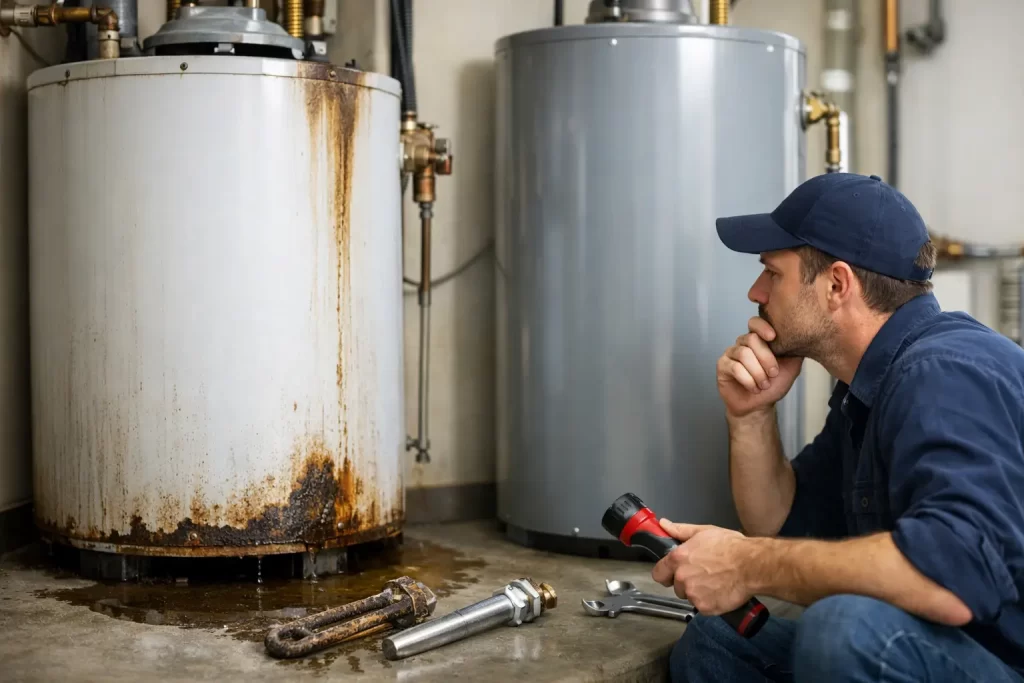
Nobody plans their week around a cold shower or a leaking tank in the basement. But that is usually how water heater problems show up – suddenly, inconveniently, and often at the worst possible time. If you are asking when should water heater be replaced, the short answer is this: replace it before age, corrosion, rising repair costs, or poor performance turn it into an emergency.
When should water heater be replaced instead of repaired?
A water heater does not always fail all at once. More often, it gives warning signs first. The challenge is knowing which problems point to a simple repair and which ones mean the unit is near the end.
For many homeowners, the first factor is age. A traditional tank water heater typically lasts around 8 to 12 years, while tankless systems can last much longer with proper maintenance. That range is not a guarantee. Water quality, usage, maintenance history, and installation quality all affect lifespan. In older Cape Cod homes, local conditions and hard use can shorten that window.
If your tank unit is pushing past the 10-year mark and starting to show problems, replacement usually makes more sense than putting money into repeated repairs. A newer system will often run more efficiently, recover faster, and give you more reliable hot water.
The clearest signs your water heater is nearing the end
Age matters, but it is not the only thing that matters. A 7-year-old water heater with serious tank corrosion can be in worse shape than a well-maintained 11-year-old unit. The best decision comes from looking at the whole picture.
Rusty water or visible corrosion
If your hot water looks rusty or you can see corrosion around the tank, fittings, or pressure relief valve, that is a red flag. In some cases, rusty water comes from old galvanized piping rather than the heater itself. But if the corrosion is on the tank, replacement may be the only real fix.
A corroded tank does not heal. Once the steel starts breaking down, the risk of leaking only goes up.
Leaks around the base of the unit
A little moisture can sometimes come from a loose connection or valve issue. That may be repairable. But water pooling around the bottom of the tank often means the tank itself has failed.
When the tank shell cracks or begins separating at the seams, replacement is the answer. Waiting usually turns a manageable service call into water damage cleanup.
Not enough hot water
If your showers are getting shorter, or the water goes lukewarm halfway through normal use, the heater may be undersized, filled with sediment, or simply wearing out. In some cases, a heating element or thermostat can be replaced. In others, especially with older tanks, weak performance is the start of a larger decline.
This is where a professional inspection helps. If the issue is isolated and the unit still has useful life left, repair can be worthwhile. If the heater is older and losing efficiency, replacement often saves money over time.
Strange noises from the tank
Popping, rumbling, or banging sounds usually point to sediment buildup. As minerals settle and harden at the bottom of the tank, the system has to work harder to heat water through that layer. That increases wear and can overheat the tank bottom.
Sometimes a flush can help, but not always. If the noise is persistent and the unit is older, the buildup may have already done lasting damage.
Frequent repairs
One repair on a water heater is normal. Multiple repairs in a short period are usually a sign the unit is on borrowed time. If you are replacing valves, heating elements, thermostats, or ignition components one after another, the money starts adding up fast.
As a general rule, if a major repair approaches half the cost of replacement and the system is older, replacement is usually the smarter move.
How old is too old for a water heater?
If you are wondering when should water heater be replaced based on age alone, start with the manufacturer date. Most tank water heaters have a serial number label that can help identify the production year.
For standard tank models, 8 to 12 years is the usual replacement window. Once the unit crosses that line, it becomes harder to justify large repairs unless it has been exceptionally well maintained. For commercial properties or rental units with heavier demand, replacement may come sooner.
Tankless water heaters can often last 15 to 20 years, but they are not maintenance-free. If scale buildup, ignition issues, or heat exchanger wear are becoming frequent, age still matters. An older tankless unit may still be repairable, but not every repair is cost-effective.
Repair or replace? It depends on the problem
This is where many property owners get stuck. They do not want to replace a unit too early, but they also do not want to throw good money after bad.
A repair usually makes sense when the issue is limited, the unit is relatively young, and the tank itself is still sound. Examples include a failed thermostat, a bad heating element, or a minor valve issue.
Replacement is usually the better move when the tank is leaking, corrosion is advanced, hot water problems keep returning, or the unit is already near the end of its expected life. It is also worth replacing if your household needs have changed. A family that has outgrown its current tank may benefit from a larger unit, a tankless upgrade, or a heat pump water heater for better efficiency.
For many homes, the real question is not whether a repair is technically possible. It is whether that repair is a smart investment.
Efficiency matters more than most homeowners think
An aging water heater does more than risk failure. It also tends to waste energy. Sediment buildup, worn components, and outdated design all reduce efficiency, which can show up in your utility bills month after month.
Newer models offer better insulation, improved burner or element performance, and more efficient operation overall. For some properties, especially those looking to lower long-term operating costs, replacing an older unit before complete failure can make financial sense.
This is especially true if you are considering a heat pump water heater or another higher-efficiency option. Between lower energy use and possible rebate opportunities, the upfront cost may be easier to justify than many homeowners expect.
Why waiting too long can cost more
The biggest risk of delaying replacement is not just inconvenience. It is damage. A failed water heater can flood a utility room, basement, closet, or finished area. That means flooring, drywall, trim, and stored belongings may all be affected.
For property managers and commercial clients, the cost of downtime can be just as serious. Tenants, staff, and customers all feel the impact when hot water is unavailable.
Planned replacement gives you options. Emergency replacement limits them. When there is time to choose the right size, fuel type, and efficiency level, you are more likely to end up with a system that fits the building and budget.
What to do if your water heater is showing warning signs
If your water heater is older, leaking, making noise, or struggling to keep up, do not wait for total failure to figure out your next step. Have it inspected by a licensed professional who can tell you whether the problem is isolated or whether the unit is nearing the end.
That matters because not every symptom means the same thing. A minor repair on a newer system can buy years of service. The same symptom on a 12-year-old unit may be the final warning before a major leak.
A good service visit should look at the tank condition, venting, connections, heating components, safety devices, and overall performance. From there, you can make a decision based on condition, not guesswork.
For homeowners and businesses across Cape Cod, that kind of clarity matters. Durfee Plumbing & Heating helps customers weigh repair costs, replacement timing, and upgrade options so they can act before a small problem turns urgent.
If your water heater is starting to make you question whether it will hold up another season, trust that instinct. Replacing it at the right time is not just about hot water. It is about protecting your property, avoiding disruption, and choosing a system you can count on every day.