

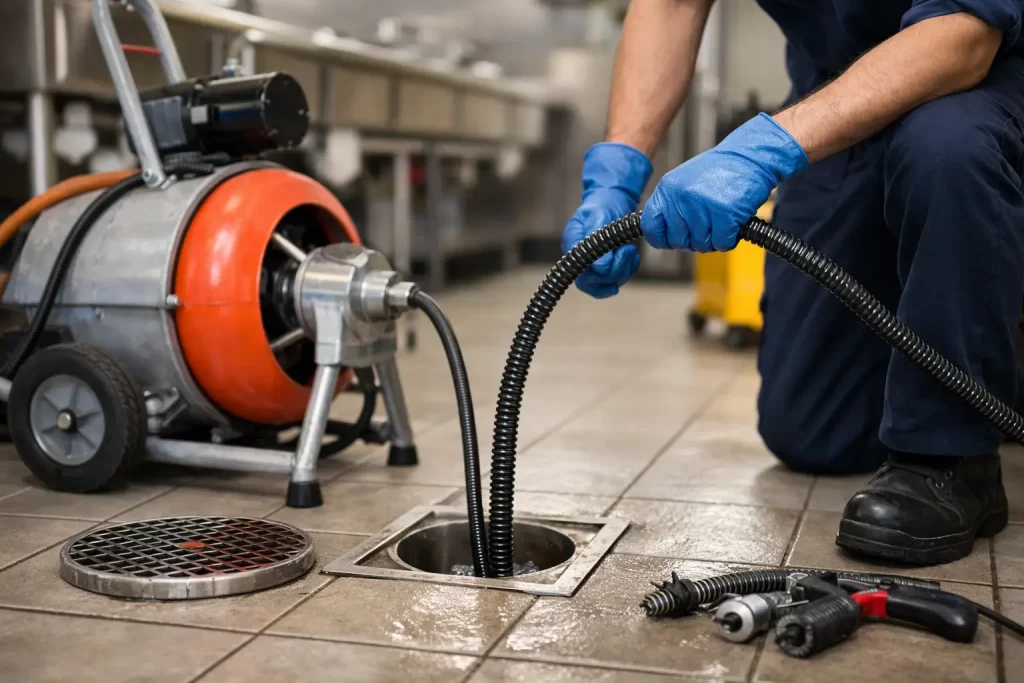
A backed-up floor drain during lunch rush is not a small inconvenience. It can shut down restrooms, slow kitchen work, create odors in customer areas, and turn a manageable maintenance issue into an emergency call. That is why a solid commercial drain cleaning guide matters for any business owner, facility manager, or property manager responsible for keeping operations moving.
Commercial drain systems handle more volume, more waste, and more abuse than residential plumbing. A restaurant may deal with grease and food solids. A retail plaza may see restroom blockages from heavy public use. Office buildings often struggle with slow drains that get ignored until one fixture backs up into another. In mixed-use properties, the problem is even trickier because drain lines can serve several tenants at once.
The good news is that most major drain failures give warning signs first. The challenge is knowing what those signs mean and when to act before a partial clog becomes a shutdown.
What makes commercial drain cleaning different
Commercial drain cleaning is not just a bigger version of household drain work. The stakes are higher, the piping layouts are often more complex, and the cause of the blockage can vary by industry. In a commercial setting, one clogged branch line might affect multiple sinks, toilets, or floor drains at the same time.
There is also the business impact. When drains fail, staff productivity drops fast. Customers notice odors and standing water. Health and safety concerns can follow, especially in food service, healthcare, hospitality, and multi-tenant properties. A slow drain in a break room sink might be tolerable for a day. A backup in a commercial kitchen or public restroom usually is not.
This is why the right approach is not just clearing the immediate blockage. It is identifying what is building up, where the restriction sits, and whether the line has a deeper issue like scale, root intrusion, poor pitch, or a damaged section of pipe.
A practical commercial drain cleaning guide for early warning signs
Most drain emergencies start as maintenance issues. If you catch them early, the repair is usually cleaner, faster, and less disruptive.
Watch for slow drainage in more than one fixture, especially if those fixtures are close together. Gurgling sounds after flushing or draining water can point to a developing blockage or venting issue. Recurring odors near sinks, floor drains, or mop basins often mean waste is sitting in the line longer than it should. Water backing up in a lower drain when another fixture is used is another clear warning.
Pay attention to patterns. If a restroom clogs every Friday afternoon or a kitchen line slows down after weekend volume, that is useful information. It may suggest your current cleaning schedule is too reactive for how the space is actually used.
For property managers, tenant complaints matter too. One report of a slow sink might not mean much. Three reports from different units in the same area usually mean it is time to inspect the line before it affects the whole building.
Common causes of commercial drain blockages
Grease is one of the biggest causes in restaurants and food prep spaces. Even with best practices, grease can cool and collect inside the line, trapping food particles over time. Soap residue and paper products are common issues in public and employee restrooms. In older buildings, mineral buildup can narrow drain interiors enough that normal waste starts snagging and collecting.
Some issues are structural. Tree roots can enter underground piping through small cracks or joints. Sagging sewer lines can create low spots where waste settles instead of flowing out. Construction debris, wipes, sanitary products, and other foreign materials can trigger sudden blockages that no amount of careful day-to-day use would prevent.
That is where trade-offs come in. If the problem is simple buildup, standard mechanical cleaning may solve it. If the pipe is damaged or invaded by roots, cleaning alone may only buy time.
Choosing the right commercial drain cleaning method
A good service call starts with diagnosis, not guesswork. Different blockages call for different tools, and using the wrong method can waste time or leave residue behind.
Drain snaking is often effective for localized clogs caused by paper, debris, or smaller obstructions. It can reopen flow quickly, but it may not fully clean the pipe wall. That means buildup can return if grease, sludge, or scale is the real problem.
Hydro jetting uses high-pressure water to scour the inside of the pipe. It is often the better choice for grease-heavy lines, recurring sludge, and more thorough cleaning. For many commercial properties, this method delivers a longer-lasting result because it clears more than just a hole through the blockage. Still, it depends on pipe condition. Older or compromised lines may need inspection first to make sure the pressure is appropriate.
Camera inspection adds another layer of value. If a line keeps clogging, a camera can show whether the issue is buildup, roots, breaks, offsets, or a belly in the pipe. That matters because repeated cleaning without understanding the cause can turn into an expensive cycle of temporary fixes.
How often should commercial drains be cleaned?
There is no one schedule that fits every building. A busy restaurant may need routine drain service far more often than a professional office. A seasonal business on Cape Cod might need pre-season cleaning, mid-season service, and a post-season check depending on occupancy and usage.
The best schedule depends on volume, waste type, fixture count, and the age of the plumbing system. If your business has already experienced repeated backups, that history should shape your maintenance plan. Waiting for a drain to clog again is usually the most expensive way to manage it.
For high-use properties, preventive cleaning can be part of normal facility upkeep instead of an emergency event. That approach tends to reduce downtime, avoid after-hours disruptions, and help managers budget for service rather than absorb surprise failures.
What to do before the plumber arrives
If a drain is backing up, stop using affected fixtures right away. Continued use can force wastewater into nearby drains, sinks, or floor areas. If possible, isolate the area and keep staff and customers away from standing water.
Avoid pouring store-bought chemical cleaners into commercial drains. These products often do little for larger blockages, and they can create safety issues for technicians working on the line later. They may also damage certain piping materials over time.
Gather useful information before calling. Note which fixtures are affected, when the problem started, whether it is recurring, and what kind of business activity was happening beforehand. If multiple drains are involved, mention that clearly. This helps the service team arrive prepared.
A company with stocked trucks and commercial drain experience can often resolve the problem faster because they are not starting from scratch once they get on site.
Preventive steps that actually help
The best prevention is not complicated, but it does require consistency. Staff training matters. Employees should know what cannot go down sinks, toilets, and floor drains. In kitchens, grease handling practices need to be strict, not occasional. In public restrooms, frequent checks can catch trouble before an overflow happens.
Scheduled maintenance is just as important as daily habits. If your business only calls for drain service when something backs up, you are operating in reaction mode. That may seem cheaper month to month, but repeated shutdowns, cleanup costs, and customer disruption often say otherwise.
It also helps to think beyond the drain opening. If your property has older underground piping, recurring issues may point to a sewer line condition that needs inspection. In that case, routine cleaning is helpful, but long-term reliability may require repair or replacement planning.
When to call for emergency service
Some drain problems can wait a day. Others should not. Call right away if wastewater is backing up into occupied areas, multiple fixtures stop draining at once, there is sewage odor combined with standing water, or your business cannot safely operate because of the issue.
For restaurants, medical offices, lodging properties, and public-facing businesses, delays can create sanitation concerns fast. For multi-tenant buildings, one clogged line can affect several units and turn a single complaint into a building-wide disruption.
That is where a responsive local contractor matters. In busy commercial settings, speed is not just convenience. It limits damage, protects health standards, and helps staff get back to normal work sooner.
How to evaluate a commercial drain cleaning provider
Not every plumbing company approaches commercial work the same way. Look for licensed professionals with experience in commercial systems, not just residential drain calls. Ask whether they offer camera inspections, hydro jetting, and emergency response. It also helps to know whether they can handle related plumbing repairs if the blockage turns out to be a larger system issue.
Clear communication matters too. You want a provider who can explain whether the problem is buildup, misuse, or pipe failure, and what the practical next step is. A good recommendation should match the condition of the system, your business type, and the urgency of the situation.
For businesses that want fewer surprises, a provider that can support both emergency response and planned maintenance usually brings more value over time.
If there is one takeaway from this commercial drain cleaning guide, it is simple: drain problems rarely improve on their own. The earlier you address the warning signs, the more control you keep over cost, scheduling, and disruption to your business.