

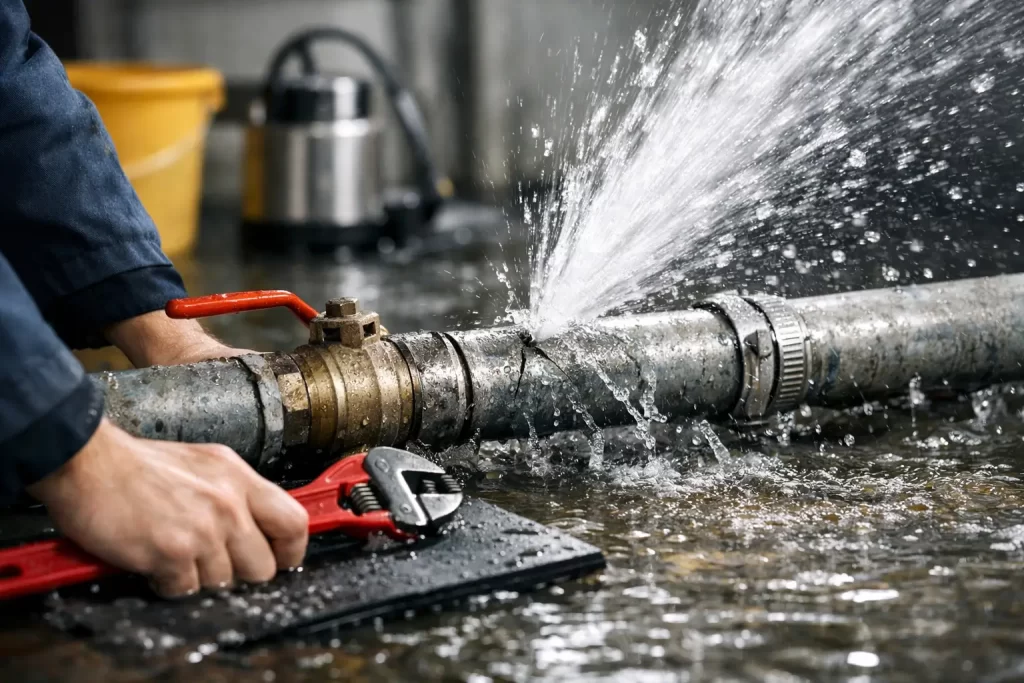
Water pouring from a burst pipe does not give you time to think through options. If you are searching for how to stop burst pipe flooding, the goal is simple – stop the water, protect the property, and get the pipe repaired before a bad mess turns into structural damage, mold, or electrical hazards.
A burst pipe can flood a basement, bathroom, kitchen, crawl space, or wall cavity in minutes. On Cape Cod, winter freezes, older plumbing, and seasonal property vacancies can make the damage worse because leaks are not always caught right away. The first few steps matter more than anything else you do later.
How to stop burst pipe flooding in the first few minutes
The fastest way to limit damage is to shut off the water supply to the broken pipe. If you know which fixture or branch line is affected and it has a nearby shutoff valve, turn that valve clockwise until it stops. If you do not know where the break is coming from, or the local shutoff does not fully stop the flow, go straight to the main water shutoff for the building.
In many homes, the main shutoff is located where the water line enters the house, often in a basement, utility room, crawl space, or near the water meter. In some properties it may be in a mechanical closet or along an exterior wall. Turn the valve clockwise if it is a wheel-style handle. If it is a lever-style ball valve, turn it a quarter turn until it is perpendicular to the pipe.
Once the main water is off, open cold water faucets at the lowest and highest points in the building. This helps drain remaining water from the lines and reduces pressure inside the system. Flush toilets once if needed to empty supply lines, but do not keep using fixtures after the water is shut off.
If water is near outlets, appliances, or your electrical panel, do not step into standing water to investigate. Shut off power to the affected area only if you can safely reach the panel without crossing wet surfaces. If you cannot do that safely, wait for emergency help.
What to do right after the water is off
Stopping active flooding is the first win, but the next half hour still matters. Move rugs, boxes, furniture, and anything absorbent away from the wet area. If the leak is under a sink or near a finished wall, place buckets or towels where they can catch dripping water, but do not assume the problem is over just because the spray has stopped. Water inside walls, insulation, and flooring often keeps spreading.
Take photos and short videos of the damage before cleanup gets too far along. That can help with insurance documentation and can also help a plumber understand where the failure started. Then begin removing standing water with towels, a mop, or a wet vacuum if you have one.
Air movement helps, but it is not a substitute for repair. Fans and dehumidifiers can slow down swelling, warping, and mildew, especially in finished basements or wood-floored areas. Still, if the pipe failed behind drywall or above a ceiling, hidden moisture can remain long after visible water is gone.
When a temporary fix is worth trying
A temporary fix can help if the pipe damage is small and you have already shut off the water. It should only be used to buy time until a licensed plumber arrives. It is not a long-term repair.
Pipe repair clamps, rubber patch kits, or plumber’s epoxy can sometimes slow a leak on accessible metal or rigid plastic piping. Wrapping the damaged area with rubber and securing it with a clamp may help on a pinhole or split, but not on a fully separated joint, a badly corroded section, or frozen pipe that has cracked along a longer run.
What works depends on the pipe material and the location of the break. Copper, PEX, CPVC, galvanized steel, and older mixed-material systems all behave differently. A patch that seems fine under no pressure can fail immediately once water service is restored. That is why temporary repairs are best treated as a stopgap, not a solution.
Signs the flooding may be worse than it looks
Some burst pipes are obvious. Others release water into hidden spaces first and only show up after ceilings stain, trim swells, or flooring starts to cup. If you notice bulging drywall, water coming from light fixtures, bubbling paint, a musty smell, or unexplained dampness in more than one room, the affected area may be larger than the visible leak suggests.
This is especially common in second-floor bathrooms, kitchen supply lines, and pipes running through exterior walls. In winter, a frozen section may thaw and open up after temperatures rise, which means the actual pipe break may be several feet away from the place where water becomes visible.
If the property sat vacant for a few days, you may also be dealing with prolonged exposure. That changes the response. At that point, you are not just stopping a leak. You are managing water damage, possible material removal, and a plumbing repair at the same time.
Why pipes burst in the first place
Frozen pipes are a major cause, but they are not the only one. Water expands as it freezes, and the pressure can split a pipe or fitting. The actual rupture often occurs when the ice begins to thaw and pressure returns to normal flow.
Other common causes include corrosion, age, poor installation, loose connections, high water pressure, shifting pipes, and worn valves or fittings. In older homes and mixed-use properties, one weak section can fail because a nearby repair changed the pressure load on the system.
On the Cape, seasonal temperature swings and unoccupied homes create extra risk. A property left with insufficient heat, poor insulation, or no winterization can develop frozen sections in crawl spaces, attics, exterior walls, and utility areas long before anyone notices.
When to call a plumber immediately
If you cannot find the shutoff, the valve will not close, the leak is behind a wall, or the pipe has split from freezing, call a licensed plumber right away. The same goes for flooding near electrical equipment, commercial spaces that cannot stay offline, and any situation where water keeps appearing after the main is shut off.
This is not the time for guesswork. Emergency plumbing service is often the difference between a targeted repair and a much larger restoration project. A properly equipped technician can isolate the line, identify the failed section, replace damaged piping, test the repair, and check for related issues such as pressure problems or additional freeze damage.
For homeowners and property managers in Cape Cod, that fast response matters even more during winter cold snaps or in seasonal homes where a small delay can lead to bigger repairs.
How to reduce damage while waiting for repair
Keep the water off and avoid turning it back on just to test whether the leak has stopped. Continue removing standing water if it is safe to do so. Lift furniture legs onto blocks or foil, pull wet textiles out of the area, and remove soaked items from enclosed spaces so they can start drying.
If water came through a ceiling and it is bulging, do not start cutting into it unless you know the electrical area is safe and you are prepared for more water to come down. In many cases, it is better to let the plumber assess the source first. A rushed opening can create a larger mess or expose you to hidden hazards.
If temperatures are still low and freezing was the likely cause, keep the building heated. The repair may address one break, but another vulnerable section can fail if the underlying cold-weather conditions are still present.
Preventing the next burst pipe flooding emergency
The best prevention is a mix of inspection, insulation, and planning. Know where your main shutoff is before an emergency happens. Test it occasionally so you are not dealing with a seized valve during a flood. Insulate exposed pipes in crawl spaces, basements, garages, and exterior walls. Seal drafts near plumbing runs, and keep indoor temperatures consistent during freezing weather.
If you leave a property unattended in winter, do not cut the heat too low. In some cases, professional winterization is the safer choice, especially for seasonal homes. Older piping, recurring freeze spots, and previous leak history all raise the risk, so preventive service can make more sense than waiting for another emergency.
Durfee Plumbing & Heating helps local property owners handle both sides of the problem – emergency repairs when a pipe bursts and practical steps that reduce the chance of it happening again.
The most useful thing you can do today is simple: find your main water shutoff before you need it. When a pipe bursts, those few minutes of preparation can save drywall, flooring, furniture, and a lot of avoidable stress.