

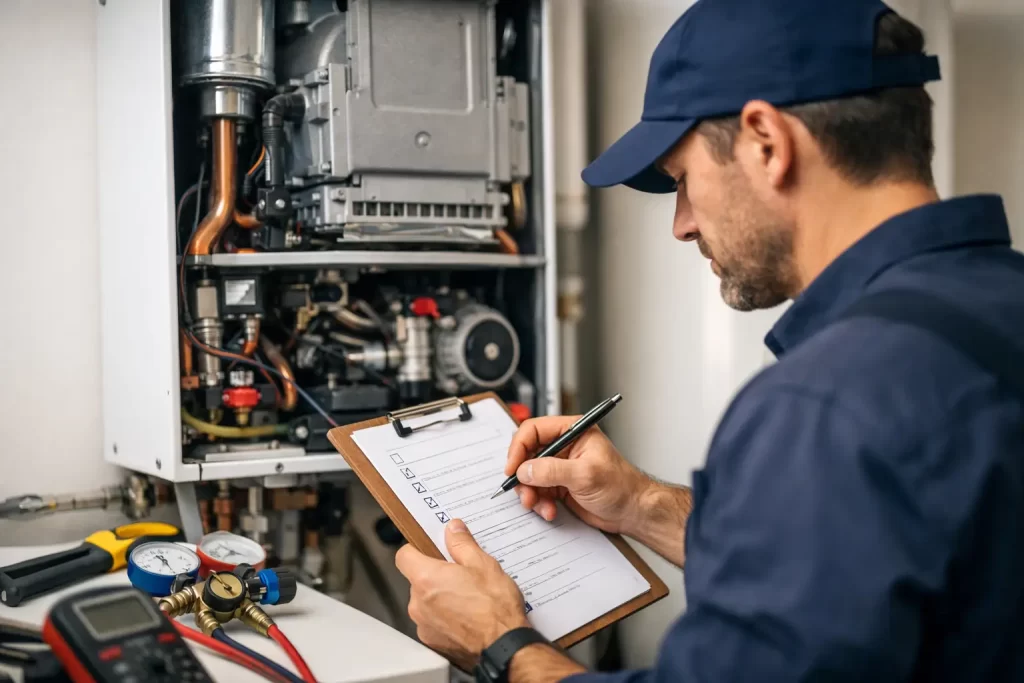
When the heat drops out on a cold Cape Cod morning, most people do not want a crash course in hydronic heating. They want to know what to check, what not to touch, and whether this is a quick fix or a call-now situation. That is exactly where a boiler repair checklist helps. It gives you a clear order of operations so you can rule out simple problems before the issue gets worse.
A boiler can fail for a few very different reasons. Sometimes it is a power or thermostat issue. Sometimes it is low system pressure, trapped air, a circulation problem, or a safety lockout. And sometimes the problem is not the boiler at all, but the distribution side – a zone valve, circulator, or air-bound baseboard loop. The trick is not guessing. The right checklist helps you narrow it down fast.
Boiler repair checklist: what to check first
Start with the basics before assuming the boiler itself has failed. Confirm the thermostat is set to heat and calling for a temperature above the room reading. If your system has multiple zones, check whether the problem is happening everywhere or only in one area. Whole-house heat loss usually points toward the boiler, controls, or fuel supply. One cold zone can point toward a circulator, valve, or air issue.
Next, make sure the boiler has power. Check the emergency switch near the unit, the service switch, and the breaker panel. A switch can get bumped accidentally, especially in basements, utility rooms, or commercial spaces where several systems are located together. If the breaker is tripped once, reset it one time. If it trips again, stop there and call a licensed technician. Repeated electrical faults are not a DIY problem.
Then look at the boiler display, if it has one. Modern units often show an error code or lockout message. That code does not always tell the whole story, but it can point toward ignition trouble, venting problems, low pressure, sensor failure, or overheating. If you have the manual on hand, check the code. If not, write it down or take a photo so the technician has something useful before arriving.
Check fuel supply and system pressure
A surprising number of no-heat calls come down to interrupted fuel. If you have an oil boiler, make sure the tank is not empty and that no shutoff valve has been closed. If you have natural gas or propane, confirm other gas appliances are operating normally. If they are not, that may be a fuel supply issue rather than a boiler issue.
After that, check boiler pressure. Most residential hot water boilers run in a normal cold-pressure range around 12 to 15 psi, though the correct number depends on house height and system design. If the gauge is showing very low pressure, the boiler may not circulate properly or may lock out. If pressure is too high, that can point to a failing expansion tank, a feed valve problem, or overheating. Either condition matters. Low pressure can sometimes be corrected, but if you are not familiar with the fill setup, it is better not to experiment.
If you see water around the boiler, relief valve discharge, or active dripping from fittings, stop treating it like a simple reset issue. Leaks change the job. They can damage controls, lower pressure, and create safety concerns.
Listen for signs the problem is in the system, not the boiler
A boiler can be running and still leave parts of the building cold. That usually means the issue is circulation, air, zoning, or heat distribution.
Listen for the circulator pump. You may hear a quiet hum or vibration when there is a call for heat. If the boiler fires but the pipes are not getting hot beyond the unit, circulation may not be happening. On some systems, a failed circulator or stuck zone valve can stop heat from reaching one part of the home while the boiler itself keeps trying to operate.
Pay attention to sounds in the baseboards or radiators. Gurgling, rushing water, or uneven heating often suggests air in the lines. Bleeding air from the system can help in some setups, but it depends on the boiler type, the location of purge valves, and whether the underlying cause is a pressure problem. If air keeps coming back, there is usually a reason – fresh water entering the system, a leak, or poor pressure control.
Also check whether all zones are affected the same way. If the first floor is warm but the second floor is cold, pressure or circulation may be part of the issue. Taller homes and mixed-use buildings can show these problems more clearly.
What you can safely reset and what to leave alone
There is a difference between a basic reset and trial-and-error troubleshooting. A homeowner can usually verify power, thermostat settings, zone demand, and visible pressure. On some boilers, a single reset according to the manufacturer instructions is reasonable. More than that is not.
If a boiler locks out once, a reset may get it going again. But repeated lockouts are a warning sign, not bad luck. Resetting over and over can flood a combustion chamber with fuel in some systems or mask a larger ignition or venting problem. If it restarts and then fails again, call for service.
Avoid opening gas components, adjusting burners, bypassing safeties, or draining the system unless you know exactly what you are doing. Boilers combine electricity, fuel, combustion, hot water, and pressure. That is not the place to improvise.
Boiler repair checklist for warning signs that need a pro
Some boiler issues should move straight to a service call. If you smell gas, shut off the area if safe to do so, leave the building, and contact the utility or emergency services right away. If you see soot, scorch marks, or signs of backdrafting, stop using the system. Those can indicate combustion or venting problems that need immediate attention.
Water leaks at the boiler block, corrosion around fittings, banging pipes, frequent pressure swings, and no-heat conditions during freezing weather also deserve quick professional service. A frozen pipe caused by delayed heat repair can turn a manageable heating call into a major plumbing emergency.
This is especially true for older boilers. An aging unit may have multiple small failures happening at once – a weak circulator, an unreliable aquastat, sticking valves, or sediment buildup. In those cases, the repair is not always just about restoring heat today. It may also be about deciding whether another repair makes sense compared with a replacement.
How maintenance changes the repair conversation
The best time to use a boiler repair checklist is before the system is completely down. Annual service helps catch weak ignition components, dirty burners, failing expansion tanks, venting issues, and pressure problems before they become emergency calls.
For homeowners and property managers, maintenance also makes troubleshooting faster. A technician can work more efficiently on a system with clear labels, accessible shutoffs, and a history of recent service. That matters when you are trying to restore heat quickly in winter.
For commercial properties and multi-unit buildings, downtime has a bigger ripple effect. One boiler problem can affect tenants, employees, customers, and water temperature in shared spaces. That is why regular inspection and prompt repair tend to cost less than waiting for a full failure.
When repair makes sense and when replacement is smarter
Not every boiler problem means you need a new system. If the unit is in otherwise good condition and the issue is a circulator, control, igniter, expansion tank, or zone component, repair is often the practical move. A licensed technician can usually verify that quickly.
But if the boiler is older, parts are becoming harder to source, efficiency is poor, and repair costs keep stacking up, replacement may be the better investment. That is not a one-size-fits-all decision. A boiler serving a year-round home has different demands than one in a seasonal property. The right answer depends on age, condition, fuel type, and how reliable the system needs to be.
In Cape Cod homes, where winter weather and coastal conditions can both add stress to equipment, waiting too long on boiler issues can create bigger comfort and property risks than many owners expect. Fast diagnosis matters.
A good boiler repair checklist does not replace a trained technician, but it does help you act in the right order. Check the thermostat, power, fuel, pressure, and zone behavior first. If the signs point to combustion, venting, leaks, repeated lockouts, or system pressure trouble, stop there and bring in a licensed heating professional. A quick, informed response usually means less downtime, less damage, and a better chance of fixing the problem on the first visit.