

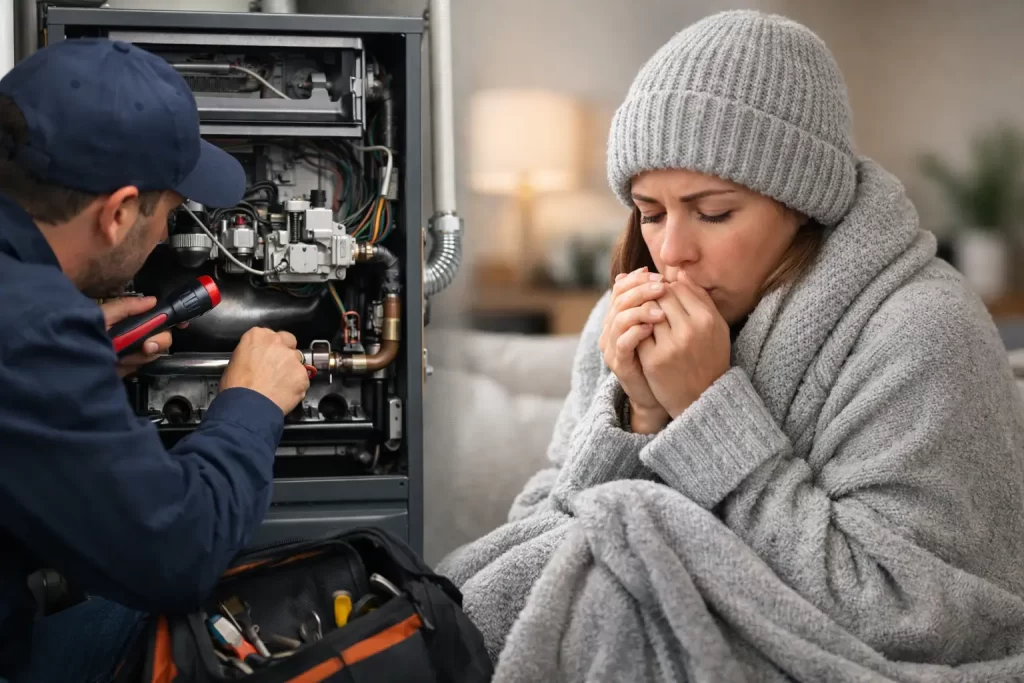
When the furnace quits on a cold Cape Cod night, the problem moves fast from inconvenience to property risk. If you need to restore heat after furnace failure, the first priority is keeping people safe, protecting pipes from freezing, and figuring out whether the issue is a simple reset or a repair that needs a licensed technician.
What to do first to restore heat after furnace failure
Start with the basics before assuming the worst. A surprising number of no-heat calls come down to a tripped breaker, a thermostat setting, a clogged filter, or a fuel supply issue. If the thermostat is set to heat but the house is getting colder, raise the setpoint by a few degrees and listen for a response from the furnace. If nothing happens, check whether the display is blank, which can point to dead batteries, a wiring issue, or loss of power.
Next, look at the electrical side. Find the furnace switch, which is often mounted nearby and can get bumped off accidentally, and check the breaker panel for a tripped circuit. Reset a breaker once if needed. If it trips again, stop there. Repeated tripping usually means there is a deeper electrical problem, and continuing to reset it can make things worse.
Then check airflow. A severely clogged air filter can cause a furnace to overheat and shut down on safety. If the filter is packed with dust, replace it and wait several minutes before trying the system again. This is one of the few easy fixes that can restore operation without tools.
If you have a gas furnace, make sure the gas valve is on and that there is no interruption in fuel service. If you smell gas, do not try to restart the unit. Leave the area, avoid switches or flames, and call for emergency help right away.
Common reasons a furnace stops producing heat
A furnace can fail for a few very different reasons, and the symptoms matter. If the blower runs but the air is cold, the problem may involve ignition, flame sensing, gas delivery, or an overheated system locked out by safety controls. If nothing runs at all, power, thermostat communication, or a failed control board may be the issue.
Older systems often fail in ways that look random to the homeowner but follow a pattern to a trained tech. Igniters wear out. Flame sensors get dirty. Blower motors slow down before they quit completely. Condensate drainage problems can shut down a high-efficiency furnace. The tricky part is that modern furnaces are designed to stop operating when something is unsafe, so a total shutdown is not always the worst-case scenario. Sometimes it means the safety controls did exactly what they were supposed to do.
Weather can play a role too. On the South Shore and across the Cape, strong winds, salt air, and cold snaps can stress older heating equipment. Intake or exhaust venting can ice over, especially on high-efficiency units, and that can cause a shutdown until the blockage is cleared.
Safe troubleshooting you can do yourself
Homeowners and property managers can handle a short list of checks safely. Beyond that, it is better to stop and call. Furnaces combine electricity, combustion, moving parts, and in many homes, natural gas or oil. That is not the place for guesswork.
Check the thermostat settings, replace batteries if needed, and confirm it is set to heat rather than cool or fan only. Replace the air filter if it is dirty. Make sure supply vents and return grilles are not blocked by rugs, furniture, or boxes. Verify the emergency shutoff switch near the furnace is on. If your system has a visible error code on the control board, write it down or take a photo. That code can help speed up diagnosis.
Some furnaces have a reset procedure, but this depends on the unit. One reset attempt may be reasonable if the manufacturer allows it. Repeated resets are not. If a furnace locks out again, that is usually a sign the original problem is still there.
Do not remove access panels and bypass safety switches to force operation. Do not try to relight modern ignition systems manually unless the manufacturer specifically says to. And do not keep running a furnace that is making loud banging, screeching, or grinding sounds. Those noises often point to mechanical failure or delayed ignition, both of which need professional attention.
How to keep the house safe while the heat is out
If the furnace cannot be restarted right away, shift from repair mode to damage control. The biggest concern during winter is frozen plumbing. Open sink cabinet doors on exterior walls to let warmer room air circulate around pipes. Let faucets drip slightly if temperatures are dropping and pipes are vulnerable. If part of the home is warmer than the rest, close doors to unused rooms and concentrate available heat where plumbing runs are most exposed.
Portable electric space heaters can help, but only if used carefully. Keep them on a level surface, away from curtains, bedding, paper, and traffic paths. Plug them directly into wall outlets, never extension cords or power strips. Do not leave them running unattended. They are useful for short-term comfort in occupied rooms, but they are not a whole-house heating plan.
If the outage extends and indoor temperatures keep falling, it may be smarter to arrange service quickly than to depend on temporary heat. For families with young children, older adults, tenants, or business operations that cannot shut down, waiting too long can create a much bigger disruption than the original furnace problem.
Signs you need immediate professional repair
Sometimes the decision is obvious. If you smell gas, see scorch marks, hear booming on startup, or notice the carbon monoxide alarm going off, stop troubleshooting and get help right away. The same goes for a furnace that repeatedly trips the breaker, leaks water around the unit, or starts and stops constantly without heating the space.
A technician can test ignition components, pressure switches, limit switches, flame sensors, blower performance, gas pressure, venting, and electrical controls safely. That matters because symptoms often overlap. A cold house does not tell you whether the failed part is simple and inexpensive or part of a larger system issue.
This is where response time and preparation matter. A fully stocked service truck can make the difference between a same-visit repair and another cold night waiting on parts. For property owners in Cape Cod communities where winter service demand can spike, that kind of readiness is more than convenience. It can prevent pipe damage, tenant complaints, and lost business hours.
Repair or replace when the furnace fails?
Not every no-heat call means the furnace is done for good. If the issue is a bad igniter, flame sensor, capacitor, or thermostat, repair is often the sensible move. If the heat exchanger is cracked, the control board has failed on an aging unit, or multiple major components are worn out, replacement may be the better financial decision.
Age matters, but not by itself. A well-maintained furnace can outlast expectations, while a neglected system may become unreliable earlier. Repair costs also need context. Spending a moderate amount on a fairly new unit can make sense. Spending heavily on a furnace near the end of its service life, especially one with declining efficiency, may only delay the next breakdown.
Homeowners also need to consider comfort and operating cost. If the system has struggled to keep up, has uneven heating, or has driven up utility bills, a replacement may solve more than the immediate failure. In some cases, high-efficiency upgrades, heat pumps, or dual-fuel options may offer better long-term value, especially when rebates or financing are available.
Preventing the next furnace failure
The best time to think about no-heat service is before you need it. Annual maintenance gives a technician the chance to catch worn parts, dirty burners, blocked drains, venting issues, and airflow problems before they turn into a shutdown in the middle of winter. It also gives you a clearer picture of the furnace’s overall condition, which helps with budgeting and planning.
Filter changes matter more than many people realize. A neglected filter can shorten equipment life, reduce efficiency, and trigger overheating problems. Keeping vents open and scheduling regular inspections are simple steps, but they go a long way.
For second homes, rentals, and commercial spaces, remote thermostats and routine seasonal checks can help spot trouble early. That is especially useful in coastal Massachusetts, where an empty building can cool down fast once the heat stops.
When you need to restore heat after furnace failure, quick action helps, but smart action matters more. Start with safe checks, protect the home while the system is down, and bring in a licensed heating professional when the problem moves beyond the basics. A reliable repair done promptly is not just about comfort. It is about protecting your property, your schedule, and your peace of mind.