

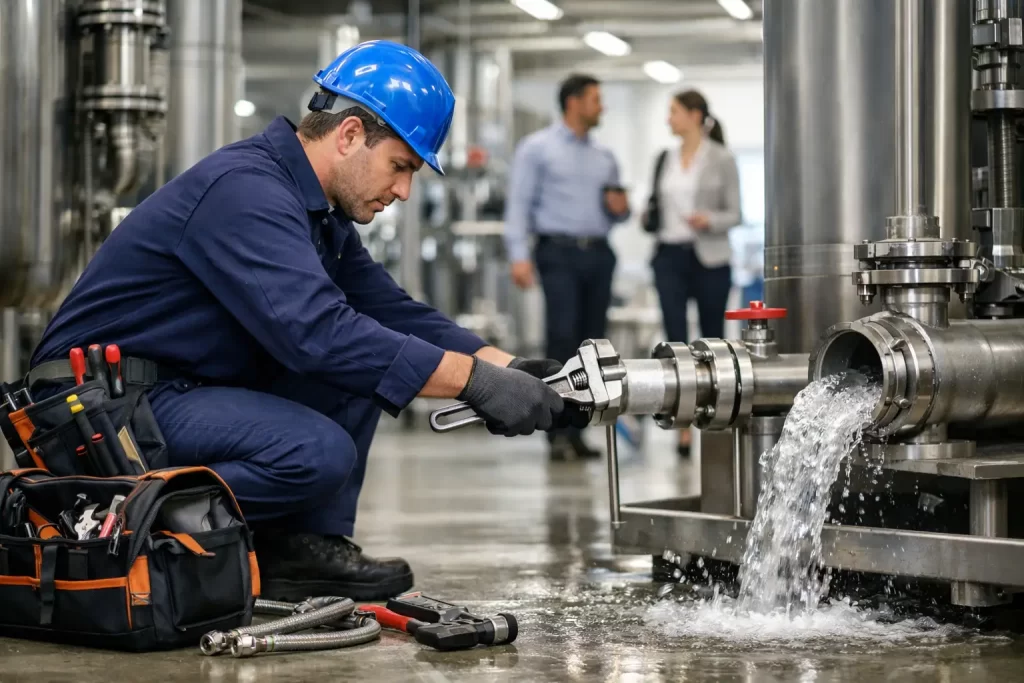
A backed-up restroom at 8:00 a.m. can turn into a customer problem by 8:15. A leaking water line behind a wall can become damaged flooring, downtime, and a costly cleanup before the day is over. That is why commercial plumbing services matter so much for businesses, multi-unit properties, and managed facilities across Cape Cod. When plumbing fails in a commercial setting, the problem rarely stays small for long.
Commercial plumbing is different from residential work in ways that affect cost, speed, and risk. A business may have multiple restrooms, commercial-grade fixtures, larger water heaters, longer drain runs, tenant needs, health code requirements, and tighter operating hours. Property managers and business owners are not just trying to get a sink or toilet working again. They are trying to protect operations, avoid disruption, and keep the building safe for staff, customers, and residents.
What commercial plumbing services usually include
In a commercial property, plumbing work often goes far beyond simple fixture replacement. Service can include drain cleaning, leak detection, pipe repair, water heater installation, sewer line troubleshooting, gas line work, restroom plumbing, kitchen plumbing, backflow-related concerns, and winterization. In many buildings, the plumbing system also connects to heating equipment, utility rooms, and energy-efficiency upgrades, which means one issue can affect several parts of the property at once.
That is one reason business owners and property managers often prefer a contractor with broader mechanical experience. If a plumbing issue is tied to a water heater, boiler connection, or gas piping concern, it helps to have licensed technicians who understand how those systems work together. That can save time during diagnosis and reduce the handoff problems that happen when multiple companies are involved.
Why fast response matters in commercial plumbing services
In a home, a plumbing problem is stressful. In a business, it can stop revenue. A restaurant with a drain issue may not be able to serve customers. An office with an overflowing toilet may need to close a restroom or send employees home. A multi-unit property with a water heater failure can suddenly have several tenants calling at once.
Speed matters, but so does arriving prepared. A quick response does not help much if the technician needs to leave for parts and come back the next day. For commercial calls, fully stocked trucks and accurate troubleshooting make a real difference because they increase the chance of completing repairs on the first visit. That is especially important when the goal is to reopen a restroom, restore hot water, or stop active water damage before it spreads.
Emergency availability also matters more in commercial settings than many people realize. Plumbing failures do not wait for business hours, and overnight problems often become morning emergencies. A 24/7 service model gives building owners and managers a better chance of limiting damage and getting ahead of complaints before the property opens.
Common problems commercial properties run into
Commercial plumbing systems deal with heavier daily use than most residential systems, so wear shows up differently. Fixtures are used more often, drains collect more debris, and small issues can build into larger failures if maintenance gets delayed.
Restroom problems are among the most common service calls. Constant use leads to clogged toilets, worn flush valves, leaking faucets, and drain backups. In restaurants and food-service spaces, grease and food waste can create stubborn drain issues that need more than a basic snaking. In offices and retail spaces, hidden leaks can go unnoticed until there is visible staining, flooring damage, or an unexplained increase in the water bill.
Water heaters are another major concern. In commercial settings, hot water demand can be inconsistent and high, especially in salons, restaurants, gyms, healthcare spaces, and multi-unit buildings. An undersized or aging system may still function, but not reliably. That usually shows up first as temperature inconsistency, slow recovery, rising utility costs, or repeat service calls. In those cases, repair may not be the most cost-effective long-term answer.
Choosing the right fix versus a temporary patch
One of the biggest decisions in commercial plumbing is whether to repair the immediate problem or address the underlying cause. It depends on the age of the system, how often the issue has happened, and how much disruption another failure would create.
A single drain clog may be a routine service call. Repeated drain backups in the same area may point to a bigger line issue. A leaking faucet may be minor. Multiple fixture leaks across a property may suggest water pressure problems, aging valves, or deferred maintenance catching up all at once. A water heater repair may be reasonable on a newer unit, but if the system is near the end of its service life, replacement may provide better reliability and lower operating costs.
This is where honest guidance matters. A good commercial plumbing provider should explain the trade-offs clearly. The cheapest option today is not always the least expensive option over the next twelve months. For a property manager balancing budgets, tenant satisfaction, and emergency calls, that distinction matters.
Preventive service saves more than money
Many business owners call for plumbing help only when something has already failed. That is understandable, especially when daily operations come first. But commercial plumbing services are often most valuable before there is an emergency.
Preventive maintenance helps catch slow leaks, early corrosion, worn fixture parts, drainage issues, and water heater performance problems before they create downtime. It can also help with seasonal preparation. On the Cape, winterization is a practical concern for seasonal properties, vacant spaces, and buildings with exposed piping. Frozen or burst pipes can cause extensive damage, and the cleanup cost usually far exceeds the cost of prevention.
There is also a customer experience side to maintenance. Clean, working restrooms matter. Reliable hot water matters. Tenants notice recurring plumbing issues, and customers do too. In some businesses, plumbing reliability is not just a maintenance concern. It is part of how people judge the property.
What to look for in a commercial plumbing partner
Not every plumber is set up for commercial work. For business owners and property managers, the right fit usually comes down to responsiveness, licensing, range of services, and communication.
Responsiveness matters because commercial problems often have a narrow window for repair. Licensed and certified technicians matter because code compliance, safety, and proper installation are not optional. A broad service range matters because commercial issues do not always stay in one lane. A plumbing problem may involve gas piping, heating equipment, or water heating systems. Clear communication matters because decision-makers need to understand the issue, the options, and the expected timeline without chasing updates.
Warranty coverage is another factor that should not be overlooked. In commercial settings, confidence in the work matters because the cost of repeat disruption can be higher than the repair itself. Financing can matter too, especially for larger replacements or upgrades that were not in the current budget but cannot be delayed.
For local properties in Barnstable and across Cape Cod, there is also real value in working with a company that understands the area. Seasonal demand, coastal weather, older buildings, and occupancy changes all affect plumbing systems in ways that out-of-area providers may not fully anticipate. That local experience can lead to faster diagnosis and more practical recommendations.
When replacement makes more sense than repair
Commercial property owners often try to extend equipment life as long as possible, and sometimes that is the right call. But there is a point where repeated repairs start costing more than replacement. This happens often with older water heaters, aging fixtures in heavily used restrooms, and piping systems with recurring leaks.
Replacement is usually worth serious consideration when repair frequency increases, parts are getting harder to source, utility costs are climbing, or the equipment no longer matches the building’s current demand. In some cases, newer systems also create opportunities for better efficiency and rebates, which can improve the math on a bigger project.
Durfee Plumbing & Heating LLC works with commercial customers who need both urgent repairs and longer-term planning, which is often the reality in active properties. Some calls are true emergencies. Others are chances to replace unreliable equipment before it fails at the worst possible time.
Commercial plumbing services should reduce stress, not add to it
For most businesses and managed properties, plumbing service is not about bells and whistles. It is about getting the problem handled quickly, correctly, and with as little disruption as possible. That means showing up when it matters, diagnosing the issue clearly, and being ready to solve more than the obvious symptom.
If your building has recurring plumbing trouble, inconsistent hot water, slow drains, leaks, or aging equipment, waiting usually does not make the job easier. The right time to address a commercial plumbing issue is often just before it becomes everyone else’s problem.