

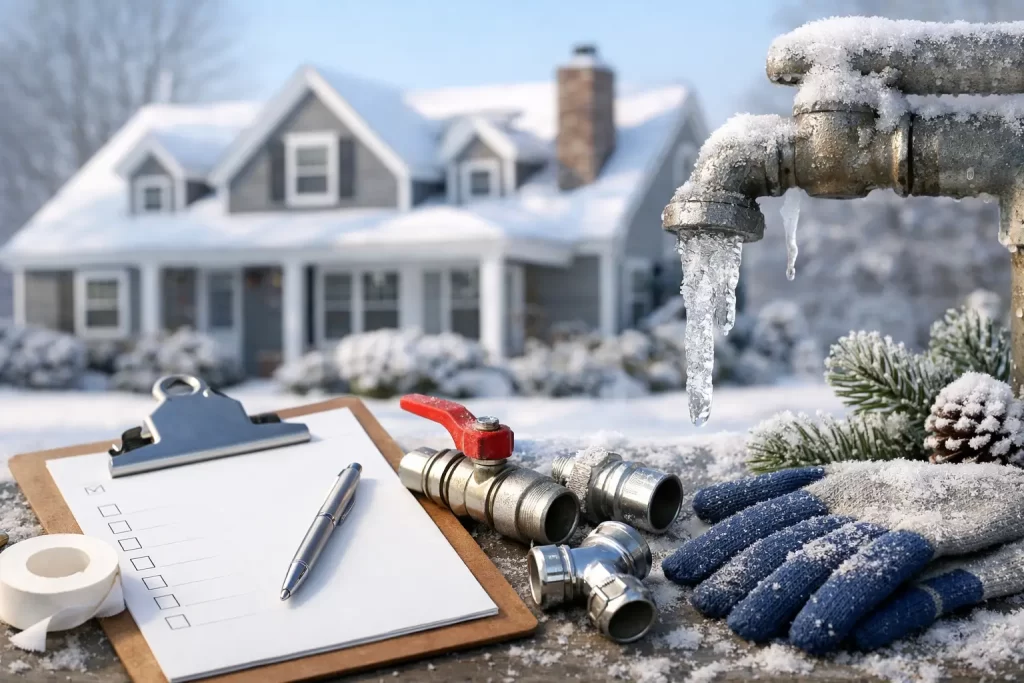
A frozen pipe usually doesn’t announce itself until the weather is already at its worst. On Cape Cod, that can mean a vacant seasonal home, a sudden cold snap off the water, and a leak that sits unnoticed until real damage is done. A solid plumbing winterization checklist helps you get ahead of that risk before temperatures drop.
For homeowners, landlords, and property managers, winterization is less about one big repair and more about preventing a chain reaction. One uninsulated pipe, one forgotten hose bib, or one thermostat set too low can lead to burst pipes, water damage, mold, and expensive cleanup. The good news is that most of those problems are preventable with the right preparation.
Why a plumbing winterization checklist matters
Winter plumbing issues tend to hit the same weak points over and over: exposed supply lines, unheated crawl spaces, outdoor fixtures, and buildings left vacant for days or weeks. In coastal Massachusetts, the challenge is not just low temperature. It’s wind, changing weather, and the fact that many homes are part-time properties that may not get checked every day.
That changes how winterization should be handled. A year-round primary residence might only need insulation upgrades and a few seasonal checks. A seasonal cottage or vacant rental may need a more complete shutdown, including draining lines and protecting the water heater and heating system. The right approach depends on how the property will be used.
Plumbing winterization checklist for homes and rentals
Start with the areas most likely to freeze first. Outdoor plumbing should be addressed before anything inside the house. Disconnect garden hoses, drain them fully, and store them somewhere dry. If hoses stay attached, trapped water can freeze and push pressure back into the faucet or pipe inside the wall.
Next, shut off and drain exterior hose bibs if your setup allows it. If the home has frost-free spigots, they still need attention. They work well when installed correctly, but they can still fail if a hose is left connected or if the pipe behind the wall is exposed to cold air. Hose bib covers can help, but they are not a substitute for proper shutoff and drainage.
Inside the home, look at any plumbing in unheated or poorly insulated spaces. That usually includes basements, crawl spaces, attics, garages, utility rooms, and cabinets on exterior walls. Pipes in those areas should be insulated, especially if they are copper or PEX lines running close to vents, foundation walls, or drafty openings. Insulation slows freezing, but it does not make pipes freeze-proof. If cold air is getting in, sealing gaps matters just as much.
Water shutoff valves should also be tested before winter. If there is ever a burst pipe or active leak, you do not want to learn in an emergency that the main shutoff is stuck or inaccessible. Every property owner should know where the main water shutoff is, how it operates, and whether it fully closes.
Don’t overlook the water heater and heating system
A plumbing issue in winter often starts as a heating issue. If the boiler, furnace, or heat pump fails and the home gets cold enough, plumbing lines can freeze within hours. That’s why winterization is never just about pipes.
If you have a traditional tank water heater, make sure the surrounding area is protected from freezing and the unit is in good condition going into winter. Sediment buildup, older valves, and aging connections can become bigger problems when the system is working harder. If the property will be shut down for the season, the water heater may need to be turned off and drained properly.
For homes that stay occupied, thermostat settings matter. Keeping the home too cool to save money can backfire fast if temperatures outside drop hard overnight. A consistent indoor temperature is usually safer than letting the house swing between warm days and near-freezing nights. For vacant buildings, remote monitoring can be worth considering, especially if no one is checking the property regularly.
If the property will be vacant, take extra steps
Vacant homes need a different level of protection. If a house, condo, or commercial property will sit empty through winter, simply turning the heat down is often not enough. A full or partial plumbing winterization may be the better option.
That can include shutting off the main water supply, draining the plumbing system, and protecting traps, fixtures, and appliances so standing water does not freeze. Toilets, sinks, showers, tubs, dishwashers, washing machine connections, and ice maker lines all need to be considered. Missing one fixture can create a hidden failure point.
This is also where DIY winterization can get risky. Draining a system sounds simple, but water can remain trapped in low spots, appliance lines, pumps, and valves. If those sections freeze, you may still end up with split pipes or damaged components. On seasonal properties, professional winterization is often the safer choice because it reduces the chance of an expensive surprise in January.
Watch the vulnerable spots that cause repeat winter calls
Certain problem areas show up again and again. Pipes along exterior walls are high on that list, especially under kitchen and bathroom sinks where cabinet doors stay closed and warmer indoor air never reaches the pipe. On very cold nights, opening cabinet doors can help a little, but it should not be your only plan.
Crawl spaces and basements are another common trouble zone. If vents are open, insulation is damaged, or air sealing is poor, those areas can become much colder than homeowners realize. The same goes for garages with laundry hookups or utility sinks. Even if the garage feels only chilly, pipes in the wall or ceiling may be much colder than the room itself.
Irrigation systems also need seasonal attention. If a sprinkler system is not shut down and blown out correctly, water left in the lines can freeze and crack fittings or valves underground. That damage may not show up until spring startup, when leaks become obvious.
What you can handle yourself and when to call a plumber
Some parts of a plumbing winterization checklist are straightforward. Disconnecting hoses, insulating exposed pipes, checking the thermostat, and locating the main shutoff are all reasonable tasks for most property owners. These steps are worth doing every year.
The line gets blurrier when the job involves draining the whole plumbing system, winterizing a vacant property, protecting specialty equipment, or addressing existing plumbing problems before cold weather sets in. Slow drains, minor leaks, aging shutoff valves, and poorly insulated pipe runs are not issues to put off until the first freeze. They tend to become urgent at the worst possible time.
A licensed plumber can also spot things homeowners often miss, like backflow risks, vulnerable pipe routing, failing hose bibs, weak connections at the water heater, or sections of plumbing exposed behind access panels. That matters more in older homes, mixed-use buildings, and properties that have been renovated over time.
A smarter winterization plan starts before the first freeze
The best time to winterize is before you need to think about ice at all. Once temperatures are already below freezing, your options narrow and the risk goes up. Preventive service is almost always less disruptive than emergency repair, especially for businesses, rental properties, and second homes.
For Cape homeowners, there is also a practical timing issue. The closer you get to the first real cold stretch, the more contractors’ schedules fill up with heating service, pipe repairs, and no-heat calls. Getting ahead of that rush gives you more control and more time to fix weak spots properly.
If you own a seasonal property, manage multiple units, or just want peace of mind before winter sets in, it helps to have the plumbing checked by a local team that understands how coastal Massachusetts homes behave in the cold. Durfee Plumbing & Heating LLC works with homeowners and property managers across the region to prepare plumbing systems for winter before small issues turn into major damage.
A good winter plan does not have to be complicated. It just has to be thorough enough for the way your property is used, because the pipe that freezes is usually the one nobody thought to check.