

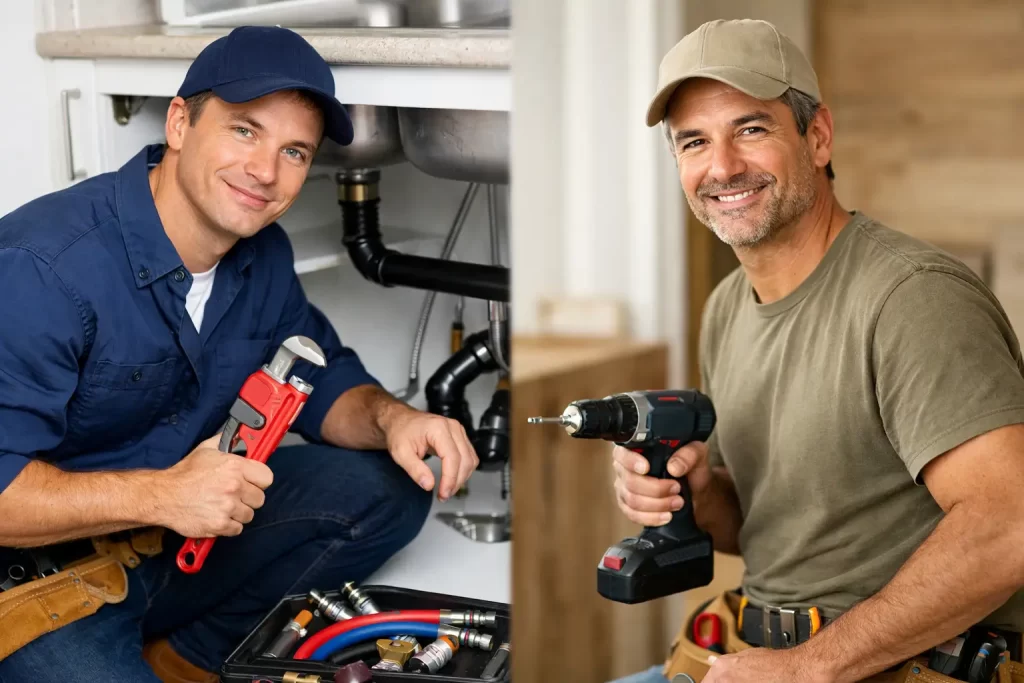
A toilet supply line bursts at 9 p.m., or your water heater starts leaking into the basement, and suddenly the question is not theoretical anymore: do you call a licensed plumber or handyman? For property owners on Cape Cod, that choice affects more than convenience. It can affect safety, insurance claims, code compliance, and whether the repair actually holds.
Licensed plumber or handyman: what is the real difference?
The biggest difference comes down to training, legal scope, and risk. A licensed plumber has formal trade training, state licensing, and a defined ability to perform plumbing work that affects water supply, drainage, venting, fixtures, and in many cases gas piping or water heating systems, depending on the job and local rules. A handyman may be skilled and useful for general property upkeep, but that does not make them qualified to take on regulated plumbing work.
This is where homeowners and property managers can get tripped up. Many small jobs look simple on the surface. Replacing a faucet, swapping out a toilet, or stopping a leak under a sink may seem like basic labor. Sometimes it is. But sometimes those jobs expose shutoff valve problems, corroded supply lines, bad drainage connections, pressure issues, or code violations that a general repair person is not equipped to diagnose.
The safer way to think about it is this: if the work touches your plumbing system in a way that could cause water damage, sanitation issues, failed inspections, or safety hazards, a licensed plumber is usually the right call.
When a handyman may be enough
There are situations where a handyman makes practical sense. If the task is cosmetic, light-duty, and does not involve modifying plumbing lines or fixtures in a regulated way, a handyman may be able to help. That might include patching drywall after a completed plumbing repair, caulking around a sink or tub, replacing cabinet hardware after leak damage, or handling general punch-list items in a rental turnover.
For busy homeowners, property managers, and small commercial sites, that kind of help can be valuable. A good handyman can take care of finish work and small repairs efficiently. The key is staying within the right lane.
If the task involves opening walls to access piping, moving drain lines, replacing a water heater, installing a new shower valve, correcting low water pressure, clearing a serious drain blockage, or working near gas-fired equipment, that is no longer handyman territory.
Small job does not always mean low risk
This is one of the most expensive assumptions property owners make. A small leak under a kitchen sink can lead to cabinet damage, mold, and hidden floor rot. A toilet replacement can turn into a flange repair. A clogged drain can be more than a clog if there is pipe damage or root intrusion. What starts as a quick fix can become a larger repair if the wrong person handles it first.
When you should hire a licensed plumber
A licensed plumber is the better choice anytime the work involves diagnosis, repair, replacement, or installation of plumbing components that matter to system performance and safety. Leaks behind walls, failed water heaters, broken shutoffs, sewer odors, recurring drain backups, frozen pipes, plumbing for renovations, and winterization work all fit that category.
The same goes for code-sensitive jobs. If permits may be required, if an inspection could happen later, or if the work affects resale value, hiring a licensed professional protects you. This matters for homeowners planning to sell, landlords managing liability, and commercial property owners who cannot afford downtime from failed repairs.
In coastal Massachusetts, there is another practical factor: older homes. Many houses in Barnstable County and across Cape Cod have aging pipes, previous repairs, and additions completed over decades. Once a wall or floor is opened, surprises are common. A licensed plumber is trained to identify what is there, explain what needs to change, and complete the work to current standards.
Water heaters are a clear line
If you are deciding between a licensed plumber or handyman for a water heater job, the answer is straightforward. Hire the plumber. Tank and tankless units involve water connections, venting in some cases, pressure relief components, shutoffs, drainage, fuel or electrical coordination, and local code requirements. A poor installation is not just inconvenient. It can create leak risks, performance issues, and safety problems.
Drain problems need real diagnosis
Drain cleaning is another area where people often underestimate the work. A slow sink may be simple. A recurring backup is not. If the line keeps clogging, there may be grease buildup, a belly in the pipe, invasive roots, scale, or a larger blockage downstream. Clearing the symptom without finding the cause wastes time and money.
Why licensing matters after the repair
The value of a licensed plumber is not limited to getting the water back on. It also shows up later.
If there is property damage, insurance carriers may ask how the repair was performed and by whom. If you are remodeling or selling, buyers and inspectors may raise questions about visible plumbing work. If a repair fails, warranty coverage matters. Licensed contractors also carry the kind of credibility that helps when property decisions need to be documented and defended.
That does not mean every handyman does poor work. It means the stakes are different. Plumbing is tied directly to sanitation, water damage exposure, and in some cases gas and heating equipment. The more risk attached to the system, the more important licensing becomes.
Cost: cheaper upfront is not always cheaper overall
A handyman may quote less for a small repair. That can look appealing when the issue seems minor. But price only tells part of the story.
If the work is outside that person’s proper scope, the lower price may buy a temporary patch instead of a real repair. Then you pay twice – once for the first visit and again when a licensed plumber has to correct the work and address the original issue. Add water damage, lost tenant time, missed business hours, or fixture replacement, and the cheap option can become the expensive one quickly.
On the other hand, not every property issue requires a licensed trade specialist. If all you need is trim repair after a leak has already been fixed, paying plumber rates for finish carpentry does not make much sense either. The right hire depends on the actual work, not just the first symptom you notice.
How to decide who to call first
If you are unsure whether to hire a licensed plumber or handyman, ask a few practical questions. Is this work connected to water supply, drainage, venting, a fixture, a water heater, or a gas line? Could a mistake cause water damage or code issues? Is the problem recurring, hidden, or hard to diagnose? Will permits, inspections, or documentation matter later?
If the answer to any of those is yes, start with the plumber.
That is especially true in urgent situations. Active leaks, no hot water, drain backups, frozen pipes, sump issues, and failed shutoff valves need fast, qualified attention. Waiting for trial-and-error repairs usually adds disruption.
For property managers and commercial clients
The decision is even less flexible when tenants, customers, or business operations are involved. A delayed or incomplete plumbing repair can affect habitability, sanitation, and uptime. Commercial restrooms, breakroom plumbing, water heaters, and drain systems are not good places to gamble on a generalist if the issue is unclear or system-related.
A responsive licensed contractor with stocked trucks and broad service capability saves time because the visit is focused on diagnosis and completion, not guesswork. For multi-unit properties and commercial spaces, that kind of speed matters.
A practical rule for Cape Cod homes and businesses
For many local property owners, the best rule is simple. Use a handyman for general maintenance and cosmetic follow-up. Use a licensed plumber for anything that installs, alters, diagnoses, or repairs the plumbing system itself.
That line protects your home, your tenants, your building, and your budget. It also helps you avoid the common cycle of temporary fixes that fail when demand is highest – during a busy rental season, a cold snap, or right before guests arrive.
Durfee Plumbing & Heating LLC sees that pattern often: a repair that looked minor until it affected hot water, drainage, or a hidden line in an older home. The right response is not just getting someone there fast. It is getting the right professional there fast.
If you are standing in front of a leak, a failed water heater, or a drain that keeps backing up, do not overcomplicate it. Choose the person who is licensed to solve the problem at its source, and you will usually save yourself time, stress, and extra repair costs later.