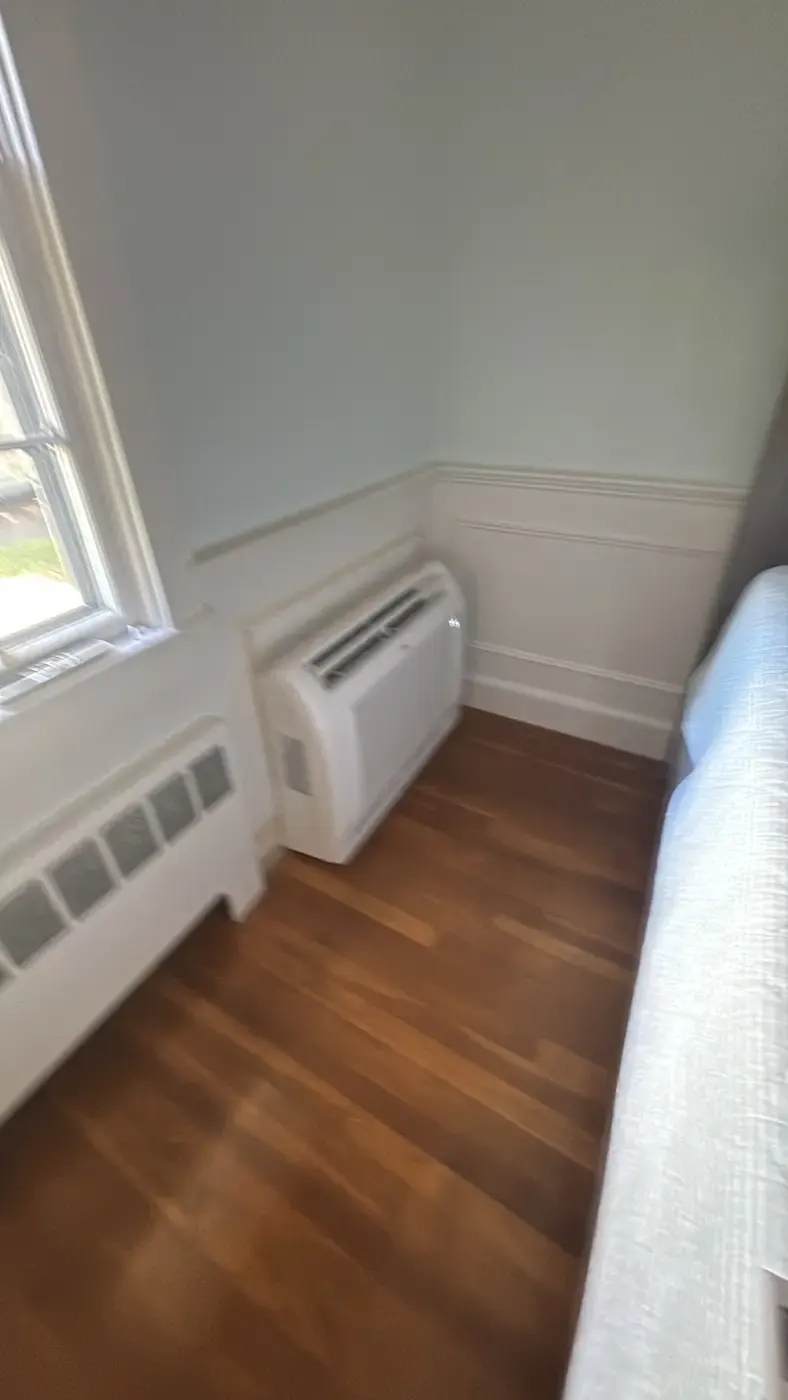
A ductless layout has to respect each room’s use, finished surfaces, condensate route and outdoor-equipment location. In Plymouth, cedarville, Manomet and downtown are far apart; the complete address is needed before an arrival window is confirmed. Durfee Plumbing & Heating designs and installs ductless mini-split systems in Plymouth, Massachusetts. Mitsubishi Electric, Daikin and Cooper & Hunter systems can provide efficient heating and cooling for a single room, a new addition, a cottage, a finished attic or an entire home without practical ductwork. The design begins with each room's load, indoor-unit location, outdoor-unit placement, condensate routing, electrical capacity and year-round comfort goals—not with a generic equipment package.
Floor-console ductless heating and cooling from a Durfee project.MA Master PlumberEPA CertifiedFamily Owned1-Year Parts & Labor WarrantyBBB Accredited
Watch before you plan your upgrade
Ductless mini-splits in Plymouth: comfort, rebates and next steps.
Considering a single-room or multi-zone mini-split in Plymouth? Durfee plans indoor units, line-set routes, condensate drainage and outdoor equipment around the rooms you want to heat and cool.
The video introduces 2026 Mass Save rebates and HEAT Loan financing. Eligibility depends on your property, equipment and project; financing requires approval. Check the current rebate requirements and HEAT Loan terms before committing.
Service built around the property—not just the ZIP code.
Plymouth covers a large mainland service area—from historic downtown and North Plymouth to Manomet, Cedarville and newer inland neighborhoods—with mostly year-round demand. Plymouth properties include historic homes, coastal properties, newer neighborhoods and year-round businesses. Plymouth's size creates more variation than a typical Cape town page should imply. The historic core contains older buildings and compact lots; Manomet and Cedarville include coastal homes; inland areas include larger subdivisions and new construction. Travel, equipment availability and exact village location are important when confirming service. We review these conditions when planning equipment access, capacity and installation.
When to call
Problems worth addressing now.
An addition, attic, garage conversion or room that stays uncomfortable
No practical path for new ductwork
An aging window unit, electric heat or room-by-room system due for improvement
A home that needs quieter zoned heating and cooling or supplemental cold-weather comfort
A Plymouth property condition—such as large-town routing—is affecting the replacement plan
What to expect
A clear service visit.
1
Review the Plymouth property conditions that affect scope, access and equipment selection.
2
Discuss rooms, use patterns, comfort problems and whether the system will be supplemental or whole-home
3
Review room load, indoor-head placement, line-set routing, condensate, electrical service and outdoor location
4
Recommend a single-zone or multi-zone design with clear equipment and installation options
5
Install, pressure-test, commission and demonstrate the approved system
Repair, replacement & planning
What a complete evaluation covers.
Before work begins, we review equipment sizing, existing connections, access and the steps needed to start up and test the finished system.
01
Room-by-room design protects comfort
Mini-split sizing is not simply square footage multiplied by a standard number. Sun exposure, insulation, ceiling height, windows, adjacent rooms and actual use affect the heating and cooling load. Durfee plans a Plymouth mini-split installation around those conditions so the selected indoor unit can manage temperature and humidity without oversized, short-cycle operation.
Room-load and usage review
Single-zone and multi-zone planning
Wall, floor and ceiling-unit options
Heating, cooling and humidity goals
02
Indoor and outdoor locations need careful planning
A good installation protects appearance, access and long-term serviceability. Indoor heads need a useful air path and a safe condensate route. Outdoor equipment needs stable support, drainage, snow and weather clearance, sound consideration and access for future cleaning and repair. These details are evaluated before line sets and electrical work are finalized.
Indoor airflow and placement
Line-set routing and finish considerations
Condensate drainage planning
Outdoor-unit support, clearance and access
03
Heating and cooling with one zoned system
Cold-climate mini-splits can provide both heating and cooling when properly selected for the building and climate. They may work as a whole-home system, supplement a boiler or furnace, or solve a focused room problem. Durfee explains when a ductless design, a ducted heat pump or a dual-fuel approach better fits the property.
Cold-climate heating capability
Supplemental and whole-home approaches
Existing boiler or furnace coordination
Controls and maintenance expectations
04
Mini-split installation in Plymouth
Plymouth covers a large mainland service area—from historic downtown and North Plymouth to Manomet, Cedarville and newer inland neighborhoods—with mostly year-round demand. Plymouth properties include historic homes, coastal properties, newer neighborhoods and year-round businesses. Plymouth's size creates more variation than a typical Cape town page should imply. The historic core contains older buildings and compact lots; Manomet and Cedarville include coastal homes; inland areas include larger subdivisions and new construction. Travel, equipment availability and exact village location are important when confirming service. We review these conditions when planning equipment access, capacity and installation.
Mitsubishi Electric, Daikin and Cooper & Hunter options
A layout made for the specific rooms
Professional startup and control review
Clear scope before approved work begins
05
Large-town routing in Plymouth
Cedarville, Manomet and downtown are far apart; the complete address is needed before an arrival window is confirmed.
Plan access and work sequencing before installation
Match equipment and connections to existing conditions
Explain options before approved work begins
06
New-home coordination in Plymouth
Plans, fixture schedules, equipment information and builder milestones should be current before pricing and rough-in.
Plan access and work sequencing before installation
Match equipment and connections to existing conditions
Explain options before approved work begins
Your Plymouth property brief
Compare the original design with today's use
Mark proposed indoor-unit positions and rooms that need closed-door comfort. Identify possible condensate and line-set routes before selecting indoor units.
Have rooms, bathrooms or occupancy changed since the equipment was installed?
An older system may have been selected before an addition or a change in use. Bring those changes into the sizing discussion, with photographs of the current distribution and available utility space.
What to include with your request
Send the property address, equipment label, access photographs and the rooms or fixtures affected. Tell us who can provide entry and when a service interruption is possible.
How do repair estimates, flat-rate pricing and diagnostic fees work?
Repair estimates require a site visit, and the visit is included in the diagnostic fee. After diagnosing the problem, Durfee presents upfront flat-rate pricing for the proposed work before you approve it. The diagnostic fee is credited toward approved work when the applicable minimums are met. The team explains the qualifying minimum and credit when arranging service.
How are heating and cooling system-replacement quotes prepared?
Heating and cooling system-replacement quotes are prepared onsite. Durfee uses the latest heat-loss calculation technology to assess the building's heating requirements and accurately size replacement heating equipment. We also review the existing system, distribution, cooling needs and installation conditions as applicable before recommending equipment and presenting the scope and price.
Do you install mini-splits throughout Plymouth?
Yes. Durfee provides qualifying mini-split installation in Plymouth, including Plymouth, Cedarville, Manomet, North Plymouth, South Plymouth and West Plymouth. Final availability and design depend on the property, electrical requirements and scope.
Can a mini-split heat in winter?
Properly selected cold-climate equipment can provide effective heating. The design should consider the room or home's load, low-temperature capacity and whether existing equipment remains as backup.
How many indoor heads will I need?
That depends on the room layout, loads, doors, airflow paths and comfort goals. One head does not automatically serve every adjacent room well, so the layout is planned before equipment is selected.
Can a mini-split be installed in a finished home?
Often, yes. The site review focuses on viable line-set and condensate routes, indoor and outdoor locations, structural support, electrical needs and the desired finish level.
What local conditions should be considered for mini split installation in Plymouth?
Cedarville, Manomet and downtown are far apart; the complete address is needed before an arrival window is confirmed.
What should Plymouth property owners plan for before this work?
Builder-coordinated underground, rough and finish plumbing for qualifying homes and residential developments.
Talk to a real local team
Need mini-split installation in plymouth, ma?
Call, text or send a quick request. Tell us what is happening and where the property is located, and we’ll help you choose the right next step.