If the furnace, boiler or heat pump will not keep the property warm, call Durfee Plumbing & Heating at (508) 217-7090. Tell us the indoor temperature, equipment type, fuel, affected zones and whether pipes may be at risk. We take calls 24/7 and confirm the available response based on location, weather, demand and technician availability.
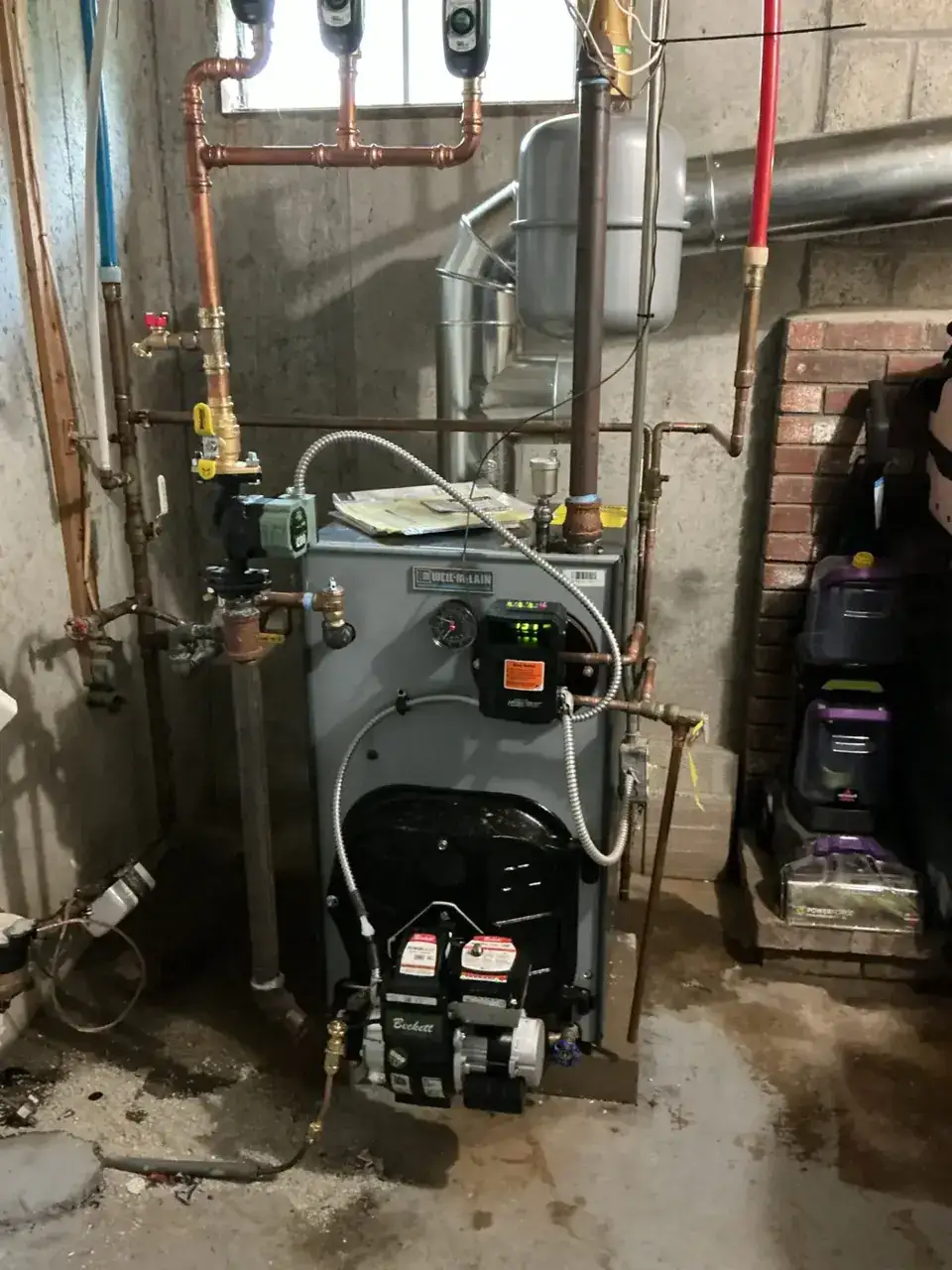
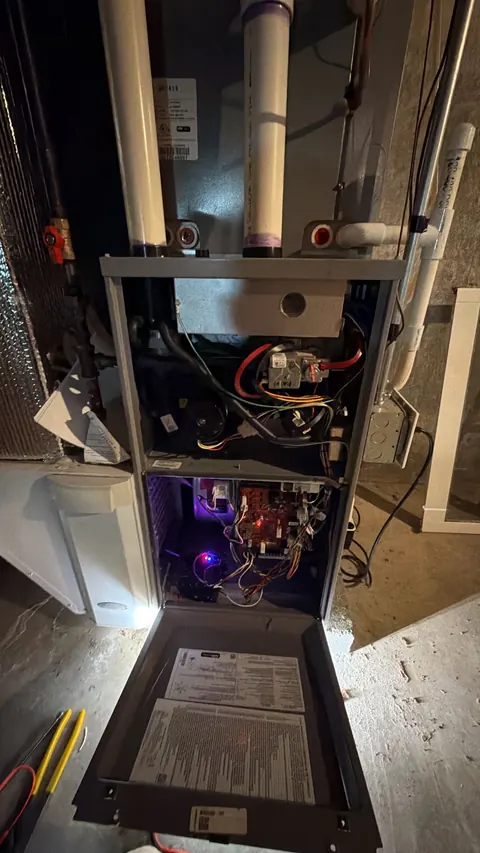
Oil-fired boiler equipment from a Durfee heating project.MA Master PlumberEPA CertifiedFamily Owned1-Year Parts & Labor WarrantyBBB AccreditedFrom a Mashpee no-heat service call: a full system diagnosis traced the issue to a bad wire within the wiring harness.
From our work in Mashpee
Lennox no-heat call: a bad wire within the harness.
A no-heat problem on this Lennox hot-air system led to a full system diagnosis that found a bad wire within the harness, followed by a successful repair that restored heat. See the job photo and learn why identifying the electrical fault matters before choosing a repair.
Check the thermostat. Select HEAT, raise the setpoint a few degrees above the room temperature, check the schedule or vacation hold, and replace user-replaceable batteries if the display is blank. Allow the normal startup delay in the manual.
Compare rooms and zones. Is the whole house cold or only one room? Note which thermostat calls for heat. Keep supply and return grilles clear. Do not force zone valves or change boiler pressure.
Look at accessible airflow and displays. Check a homeowner-accessible filter with the system off according to its manual. Record external fault codes before anything is changed. Look from ground level for snow obstructing outdoor equipment or vent openings; do not climb, dismantle vents or approach hot exhaust.
Note the power and fuel situation. Check for a neighborhood outage and read an accessible fuel gauge. Do not use a stove, oven or outdoor heater for indoor heat. If temperatures are falling toward freezing, call promptly and explain the freeze risk.
Find your equipment
Heating checks by fuel and system type.
Fuel and equipment type are separate: for example, a boiler may burn gas, propane or oil, while an indirect tank uses that boiler’s heat. These checks help describe symptoms; they do not confirm a failed part or promise service for every specialty system.
Natural gas & propane (LP)
Furnaces and boilers may use a standing pilot or electronic ignition. Check thermostat settings and note any visible status code without opening covers. For propane, read an accessible tank gauge; if empty or service was interrupted, contact the supplier for its required checks before restart. Do not open valves or test for leaks yourself.
Heating oil & biofuel blends
Read an accessible tank gauge and confirm delivery history. A burner lockout, empty tank, rumbling or smoke needs service. Do not press the burner reset, bleed an oil line or try to ignite an oil burner. Tell the technician about any reset attempts already made.
Electric furnaces & resistance heat
Check the thermostat, schedules and whether other rooms have heat. Note a tripped breaker but leave it for a qualified professional; do not remove covers or touch wiring, elements or high-limit controls. Keep furniture and curtains clear of electric baseboards.
Air-source heat pumps & ductless mini-splits
Select HEAT, set the temperature above the room reading, and use AUTO fan if the manual recommends it. In multi-zone systems, check that heads are not requesting conflicting modes. A brief defrost cycle can interrupt heating. Inspect accessible filters per the manual; do not chip ice, pour hot water on the unit or handle refrigerant.
Dual-fuel & geothermal systems
Dual-fuel systems combine a heat pump with a furnace; geothermal systems use an electric heat pump and a ground loop. Record which part appears to run and any fault display. Leave fuel-changeover settings, emergency-heat configuration, loop pressure and internal controls to a technician.
Wood, pellet, solar-assisted & shared building heat
These need their own manufacturer or building-operator instructions. Do not use accelerants, bypass stove safeties or work on chimneys, pressurized solar loops or shared boilers. Contact a qualified specialist or building manager. Mention any backup heater when requesting help; service availability depends on the equipment.
Know your ignition system
How to approach a pilot light that has gone out.
Some older natural gas and propane appliances have a standing pilot. Many newer furnaces, boilers and tankless water heaters ignite automatically. Electric, heat-pump and oil-fired equipment do not have a gas pilot to relight.
Identify the appliance first. Read its model label and the lighting instructions attached to that exact appliance. Find the matching manufacturer manual. If the label is missing, unreadable, or does not describe homeowner relighting, call for service.
Check the safety conditions. Do not attempt lighting after a gas odor, repeated pilot failure, flooding, soot, damaged venting or a suspected combustion-air problem. Do not remove a sealed burner cover.
Follow the appliance label exactly. Only if it explicitly allows homeowner relighting, follow its OFF position, full waiting period, pilot setting, built-in igniter and control-hold sequence. Timing and controls differ by model; there is no safe universal sequence. Never force a control or improvise with a match or lighter.
Stop if the labeled attempt fails. If the pilot will not light, will not stay lit, or goes out again, leave the appliance off as directed by its label and arrange service. Do not repeat attempts or bypass the flame-safety device.
For electronic ignition, do not try to light the burner manually. Record the displayed fault and contact a technician. A pilot that repeatedly goes out needs diagnosis, not repeated relighting.
Have your town and property address, callback number, equipment type, fuel, model number, visible fault code and the time the problem began ready. Explain whether the whole home is affected, whether there is a leak, and whether anyone has already reset the equipment. Only take photos if the area is safe.
For Cape Cod, Plymouth, Wareham and Marion, call (508) 217-7090 to discuss urgency and available service. Online requests are for follow-up and do not guarantee emergency dispatch or an arrival time.
Tell us whether warm air normally comes from vents, heat comes from baseboards or radiators, or you use a heat pump. Note whether all rooms or just one zone are cold and whether domestic hot water has also stopped. This helps the team prepare; it does not replace onsite diagnosis.
Give us the property town, a contact who can provide entry, the indoor temperature if known and any concern about freezing pipes. Call to confirm availability and who can approve work. An online request does not reserve an emergency dispatch.
Gas smell, smoke or a carbon monoxide alarm?
Leave the building and call 911 from outside. If you smell gas, do not operate switches or appliances or try to shut off the gas. Follow emergency-responder instructions before arranging service.
Start with safety, temperature and the heating system.
A no-heat call is an urgent symptom, not a diagnosis. The cause may involve a thermostat or control, power, fuel, airflow, ignition, circulation, defrost, a safety lockout or another equipment condition. Durfee identifies the system and reported risk, then diagnoses the fault onsite before presenting approved repair options.
Report the heating loss and property conditions
A no-heat call in Barnstable County needs the equipment type, indoor temperature, affected areas and whether the building is occupied. Tell us if pipes may be at risk or if an away-from-home owner needs a local contact to provide access. We confirm the available response for your town and explain the next step before a visit is arranged.
Problems and service needs we can assess
Gas or oil furnace will not start or deliver warm air.
Boiler will not run, one or more zones are cold, or circulation has stopped.
Heat pump is not heating, repeatedly shuts down or relies only on backup heat.
Indoor temperature is falling in an occupied, rental or seasonal property.
Plumbing may be exposed to freezing because the primary heat source is down.
What to tell us when you call
Give the exact address, indoor temperature, heating-system type, fuel, make or model if available and any displayed code. Tell us whether anyone is staying in the property, whether another heat source is operating and who can provide access and approve work.
What to do before the technician arrives
If there is no gas odor, smoke, carbon-monoxide alarm or unsafe electrical condition, check the thermostat setting and note whether the equipment has power. Do not remove service panels, bypass safety controls, use an oven for heat or repeatedly reset equipment that will not stay running. Protect occupants first and follow emergency-responder instructions for any hazard.
Repair timing and freeze protection
The initial visit focuses on diagnosis and safe restoration when a suitable repair can be completed. Weather, demand, access and parts availability affect timing. If heat cannot be restored immediately, discuss safe temporary steps and whether plumbing winterization or another qualified response is needed to reduce freeze risk.
How an urgent no-heat call moves forward
Arrange the diagnostic visit. Tell us the symptoms, property address and access arrangements. Repair estimates require a site visit, included in the diagnostic fee. We confirm the fee and any qualifying minimum for a credit before the visit.
Review the findings and price. The technician explains the cause, proposed repair and upfront flat-rate price. You approve the work before it begins; the diagnostic fee is credited when the applicable minimums are met.
Complete and check the approved work. We check operation as appropriate to the repair and explain remaining concerns, maintenance needs or recommended follow-up. Parts availability and access can affect completion.
Seasonal & local proof
No-heat repair for Cape Cod furnaces, boilers and heat pumps.
When heat stops, tell us the equipment type, affected rooms and whether the property is occupied. Durfee diagnoses furnace, boiler and heat-pump problems and explains the repair options. Call with the address and symptoms to confirm the available response.
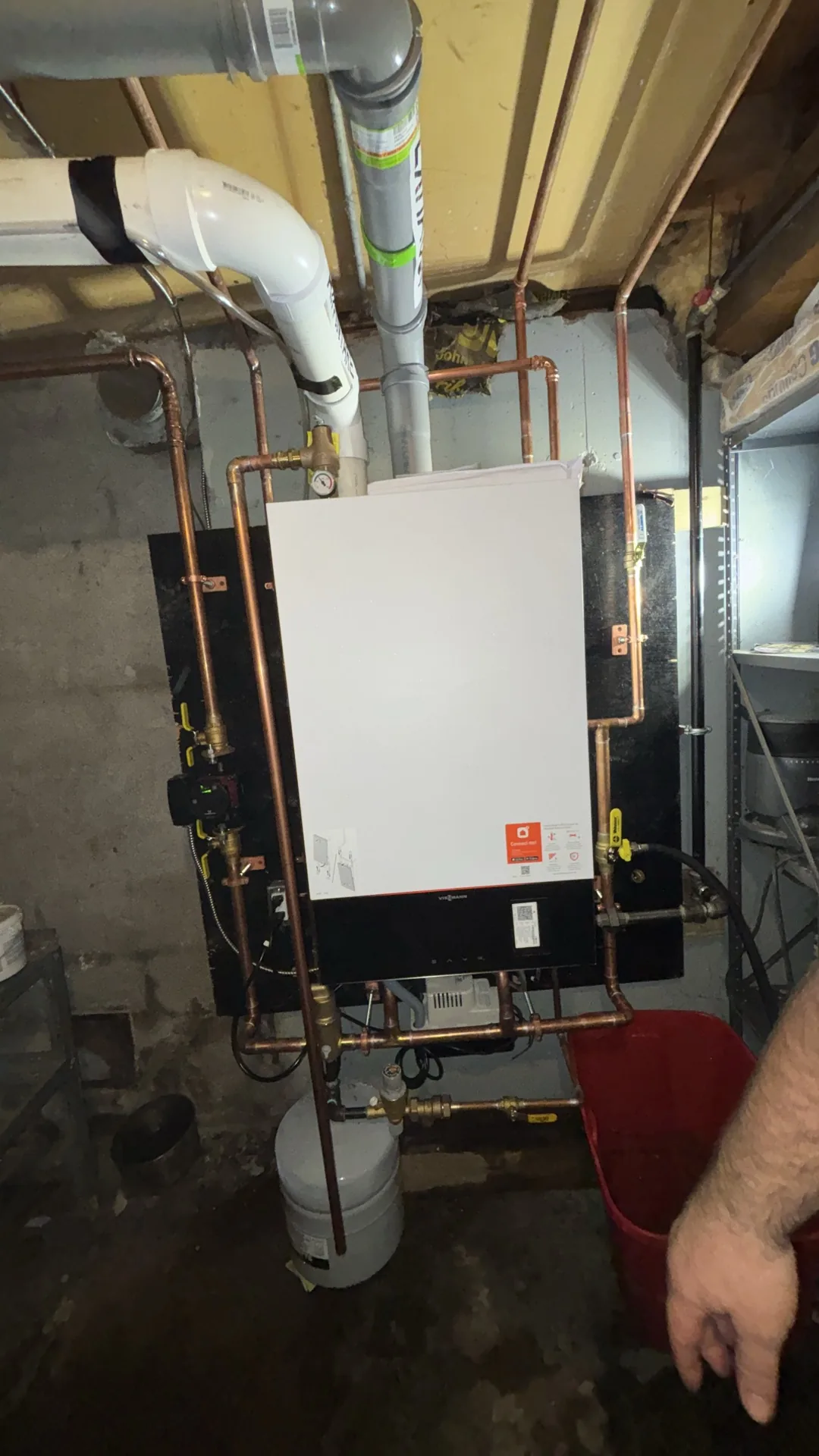
Real Cape Cod project: a Viessmann Vitodens 100 combi boiler installed by Durfee. No-heat diagnosis may involve the boiler, controls, pumps, piping, venting or connected zones; this image is installation proof, not a claim that every no-heat call requires replacement.
★★★★★
“Absolutely fantastic response and service! On a Friday afternoon of a holiday weekend, Durfee replied in less than 15 minutes.”
Sharon M. — Google review
Pricing guidance
What the first no-heat visit costs.
The standard diagnostic and dispatch fee is $149. It covers travel to the property and onsite diagnosis; it is not the repair price. After finding the cause, the technician presents an upfront flat-rate repair option before work begins. The fee is credited toward approved work when the applicable minimums are met. Confirm the current fee and credit terms when booking.
Based in South Dennis, Durfee serves all 15 Cape Cod towns in Barnstable County, MA. Choose your town for local service details. Appointments depend on the address, work needed and availability.
No-Heat Repair Costs, Estimates and 24/7 Service Calls
How do repair estimates, flat-rate pricing and diagnostic fees work?
Repair estimates require a site visit, and the visit is included in the diagnostic fee. After diagnosing the problem, Durfee presents upfront flat-rate pricing for the proposed work before you approve it. The diagnostic fee is credited toward approved work when the applicable minimums are met. The team explains the qualifying minimum and credit when arranging service.
Do you take no-heat calls 24/7?
Yes. Call (508) 217-7090 24/7 with the address, indoor temperature, equipment type and symptoms. Durfee confirms the available response based on location, weather, current demand and technician availability; an immediate arrival or same-day completion is not guaranteed.
What should I do if I smell gas or a carbon-monoxide alarm is sounding?
Leave the building and call 911 from outside. Do not operate switches, appliances or the heating equipment. Follow emergency-responder and gas-utility instructions before arranging HVAC service.
Can you diagnose furnaces, boilers and heat pumps?
Yes. Durfee provides service for qualifying gas and oil furnaces, gas and oil boilers, hydronic and steam systems, and ducted or ductless heat pumps. Share the system type, brand and fault code when known so the appointment can be prepared correctly.
Can you give me the no-heat repair price by phone?
The standard diagnostic and dispatch fee is $149, but the repair price depends on the onsite diagnosis. After identifying the cause, the technician presents an upfront flat-rate repair option before work begins. Confirm the current fee and diagnostic-fee credit terms when booking.
What if the house is vacant and pipes may freeze?
Tell Durfee immediately that the property is vacant, the current indoor temperature if known, who can provide access and whether anyone is monitoring the building. If heat cannot be restored promptly, discuss safe temporary protection and whether plumbing winterization is appropriate.
Talk to a real local team
Has the property lost heat?
Call, text or send a quick request. Tell us what is happening and where the property is located, and we’ll help you choose the right next step.