Durfee Plumbing & Heating • South Dennis, MA
Heat-pump installation and replacement on Cape Cod
A Cape Cod heat pump needs to fit the home's winter heating demand as well as its summer cooling needs. Durfee designs and installs ducted, ductless and dual-fuel systems after an onsite assessment. We review the building, existing equipment, distribution, electrical requirements and how the property is occupied before recommending a system.
Before you book
Plan a heat-pump installation around your home
Send the property town, current heating fuel, rooms to be served and whether you want whole-home or supplemental heating. An onsite assessment defines the system, installation work and quote. No savings, incentive or fixed installation price is assumed before that review.
Watch before you plan your upgrade
Heat pumps in Cape Cod: see your options in 51 seconds.
Durfee Plumbing & Heating installs ducted and ductless heat pumps for Cape Cod homes. Compare whole-home heating and cooling with a system that works alongside existing heat, then arrange an onsite design and quote.
 Watch video · 51 seconds
Could your installation qualify for incentives?
The video introduces 2026 Mass Save rebates and HEAT Loan financing. Eligibility depends on your property, equipment and project; financing requires approval. Check the current rebate requirements and HEAT Loan terms before committing.
Before you decide
Who installs heat pumps on Cape Cod?
Durfee Plumbing & Heating installs ducted, ductless and dual-fuel heat pumps for Cape Cod homes from its South Dennis base. An onsite assessment reviews heating and cooling loads, room layout, insulation, existing ducts, electrical capacity and backup heat before equipment is selected. Call (508) 217-7090 to arrange an installation assessment.
Service information from Durfee Plumbing & Heating LLC · South Dennis, Massachusetts
Will a heat pump work through a Cape Cod winter?
A properly designed cold-climate system can provide winter heat, but performance depends on the house, equipment operating range and installation. The design should address the home’s heating load at local winter conditions and whether backup heat is needed.
Can a heat pump replace my boiler?
It may be possible, but the answer depends on heat loss, how each room is served, electrical capacity and the proposed equipment. A boiler-to-heat-pump conversion needs a complete distribution and cold-weather plan, not a capacity match based only on the old boiler.
What to have ready when you contact us
- Your existing heating and cooling equipment.
- Rooms with comfort problems and any recent insulation upgrades.
- Whether you want whole-home heating, added cooling or a hybrid system.
Straight answers. Skilled work.
Size the system for the building and the rooms.
We use modern heat-loss calculation technology to assess heating requirements and review cooling loads and distribution. Existing equipment size and square footage are starting information, not a complete design. Insulation, windows, room layout, air movement and additions can change the capacity and type of system that fits the property.
Heat-pump design around how you use your Cape Cod home
A Barnstable County heat-pump proposal should account for the home's heating load, cooling needs, existing distribution and winter occupancy. Tell us whether the goal is whole-home heating, an addition or support for an existing furnace or boiler. We review indoor and outdoor placement, electrical coordination and the complete installation scope onsite.
Problems and service needs we can assess
- Replacing an aging furnace, boiler, heat pump or air conditioner.
- Adding heating and cooling to an addition or renovated space.
- Comparing ducted, ductless and dual-fuel equipment.
- Planning a whole-home conversion or supplemental system.
- Addressing uneven comfort with a design that considers each served space.
Compare proposals for the same heating job
Ask each proposal to identify the rooms served, equipment combination, design heating capacity, controls, electrical responsibilities, removal of old equipment and startup work. A system intended to supplement existing heat is a different scope from a whole-home replacement. For a seasonal property, explain the winter heating plan and access arrangements before equipment is selected.
Ducted, ductless or dual-fuel?
A ducted heat pump uses supply and return ducts, so we review their condition, airflow and ability to serve the rooms. Ductless systems use indoor units placed for the spaces they condition; closed bedrooms need their own distribution plan. Dual-fuel systems combine a heat pump with a compatible fuel-fired furnace and require a clear control and changeover strategy.
Cold-climate heat pumps for Massachusetts winters
Cold-climate equipment must be assessed at the outdoor temperatures relevant to the design. We review capacity, the building load and any supplemental or retained heating before recommending a system. The proposal should explain whether the heat pump is intended to serve the whole home or selected spaces, and how any backup source will operate.
Review the complete installation
Outdoor-unit placement must account for clearance, drainage, snow, sound and future service access. Indoors, we review unit placement or duct connections, line routes, condensate handling, controls and electrical requirements. Any electrical work, equipment removal or other-trade responsibilities should be identified in the approved scope.
- Onsite building and distribution review with load-based sizing.
- Equipment selections and the rooms or zones they will serve.
- Outdoor placement, indoor connections and condensate route.
- Electrical, control and backup-heat coordination.
- Installation, startup checks and homeowner operating guidance.
Commissioning and handover
After installation, startup checks are performed for the equipment and approved scope, following manufacturer requirements. These can include refrigerant-circuit checks, condensate drainage, airflow, controls and heating/cooling operation where conditions allow. We explain thermostat settings, filter access, maintenance needs and any seasonal follow-up.
Compare the full project cost
System type, zones, distribution changes, electrical work and installation access affect the price. Review current rebate and financing eligibility before relying on them in a budget; availability and approval depend on program and provider requirements. The onsite proposal identifies the actual equipment, work and exclusions.
Heat pump vs. oil heat on Cape Cod
Compare annual oil use, electricity rates, the existing system condition and how heat reaches each room. A ductless heat pump does not directly replace the water circulating through existing baseboard. Whole-home conversion may need new room units or ducts; a supplemental design retains some existing heat. Review winter capacity, any backup strategy and the complete installation cost before comparing operating costs. Savings depend on the home, equipment, rates and operation.
Mass Save heat-pump rebates
Check the current Mass Save program for the proposed equipment and project. Whole-home, partial-home and basic rebate categories have different requirements, including how existing heating is used. Seasonal occupancy can affect eligibility. Verify the current equipment, installer and documentation rules before the project begins; a rebate should not be assumed from the brand name alone.
Heat-pump financing and the Mass Save HEAT Loan
The Mass Save HEAT Loan offers 0% financing opportunities for eligible efficiency improvements. Program authorization and approval by a participating lender are required; approval is not automatic. Review the current requirements, any required Home Energy Assessment and the proposed installation scope before applying. The official program links below provide current terms and application steps.
From onsite assessment to a commissioned system
- Review the property. Discuss comfort concerns, year-round or seasonal use, existing fuel and equipment. Assess heating and cooling loads, distribution and access.
- Compare system designs. Review capacity, ducted or ductless layout, backup strategy, controls and installation responsibilities with the quoted options.
- Approve, install and commission. Confirm scope and scheduling, complete the approved installation and startup checks, and review operation and maintenance with the owner.
From our work in Harwich
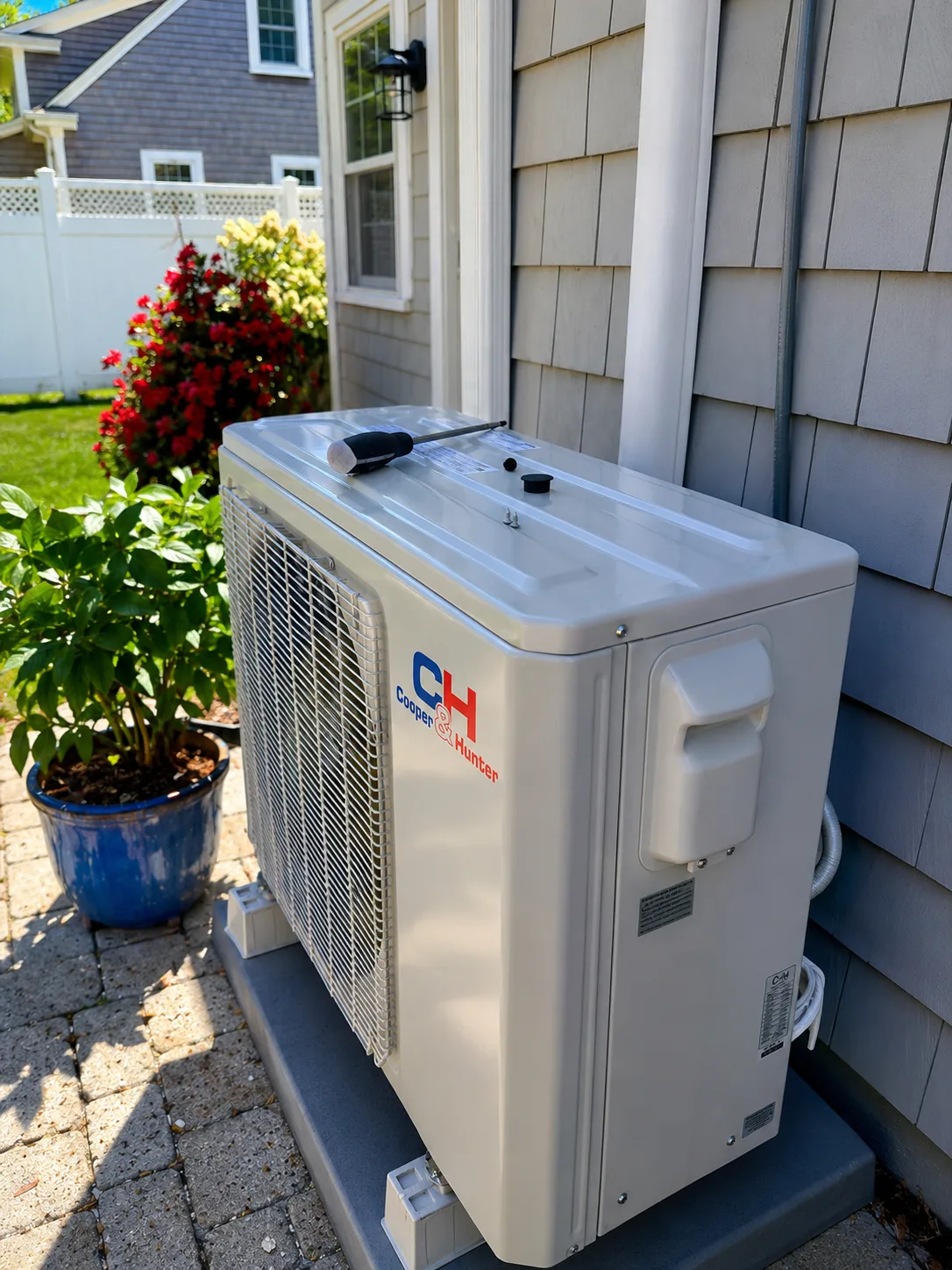
Cooper & Hunter ductless mini-split installation.
Durfee installed a Cooper & Hunter ductless mini-split system at a Harwich property. This enhanced project image features the outdoor unit beside the home.
Planning a ductless installation starts with the rooms that need heating and cooling. Outdoor-unit location, indoor-unit positions and connection routes are reviewed together so the installation fits the property and leaves access for maintenance.
Mini-split installation in Harwich →Local coverage
Heat Pump Installation in your town.
Based in South Dennis, Durfee serves all 15 Cape Cod towns in Barnstable County, MA. Choose your town for local service details. Appointments depend on the address, work needed and availability.
Cape Cod · Barnstable County, MA
Additional mainland service areas
Service questions
Heat Pump Installation and Repair Pricing Explained
How do repair estimates, flat-rate pricing and diagnostic fees work?
Repair estimates require a site visit, and the visit is included in the diagnostic fee. After diagnosing the problem, Durfee presents upfront flat-rate pricing for the proposed work before you approve it. The diagnostic fee is credited toward approved work when the applicable minimums are met. The team explains the qualifying minimum and credit when arranging service.
How are heating and cooling system-replacement quotes prepared?
Heating and cooling system-replacement quotes are prepared onsite. Durfee uses the latest heat-loss calculation technology to assess the building's heating requirements and accurately size replacement heating equipment. We also review the existing system, distribution, cooling needs and installation conditions as applicable before recommending equipment and presenting the scope and price.
Is a mini-split the same thing as a heat pump?
A mini-split that provides both heating and cooling is a heat pump. Heat pump describes the technology that moves heat; mini-split describes the equipment arrangement. Most homeowners use mini-split to mean ductless indoor units, although compact ducted options also exist. Cooling-only mini-splits do not provide heat. For a Cape Cod heating upgrade, the useful comparison is usually a ducted heat pump versus a ductless mini-split heat pump.
Should my Cape Cod home use a ducted or ductless heat pump?
Usable, properly sized ducts can make a ducted heat pump a practical whole-home option. Ductless equipment often suits Cape Cod cottages with boiler or baseboard heat, additions and rooms without ducts. A mixed design can also work. Durfee reviews room loads, duct condition, insulation, bedroom doors and winter occupancy before recommending how each room will receive heating and cooling.
Which costs less when heating and cooling the same rooms?
Neither design is always cheaper. Compare quotes for the same rooms and winter heating requirement. Reusing suitable ducts can favor a ducted system; avoiding new ductwork can favor ductless. Multiple indoor units, electrical upgrades, drainage and installation access affect the total. Running costs depend on the exact equipment, duct losses, electricity rates and use. A one-room quote is not a fair comparison with a whole-home system, and lower energy use does not guarantee a lower bill.
Can mini-splits heat my entire home through winter?
Yes, a properly designed cold-climate mini-split system can provide whole-home winter heating. The selected equipment must meet the home's heating demand at local winter design temperatures and distribute heat to every intended room. Durfee evaluates room-by-room heat loss, low-temperature capacity, outdoor-unit placement and defrost drainage. One wall head should not be assumed to heat a whole house; the design determines whether supplemental heat is needed.
Do I need an indoor unit in every bedroom?
Not necessarily, but every bedroom needs a reliable way to receive heating and cooling when its door is closed. Options include a dedicated ductless unit or a suitably designed compact ducted air handler serving several bedrooms. A hallway head alone may leave closed bedrooms uncomfortable. Room loads, layout, airflow and the equipment's minimum output guide the design; adding more heads is not automatically better.
Can I keep my boiler or furnace as backup?
Often, yes. A serviceable boiler can remain alongside a heat pump, and a compatible furnace can be part of a dual-fuel system. Durfee reviews controls and the planned changeover so the systems work together. If the boiler also makes domestic hot water, that function needs a separate plan before removal. Keeping fuel-fired heat in use also affects rebate eligibility and may require qualifying integrated controls.
Can either system qualify for Mass Save rebates?
Yes. Both ducted and ductless heat pumps can qualify when the customer, property, matched equipment and installation meet the current Mass Save rules. The system type alone does not establish eligibility. Existing fuel, winter occupancy, weatherization, installer participation and whether existing heat remains in use affect the rebate pathway. Durfee reviews these details before equipment selection; confirm the current program requirements before including a rebate in your budget.
Do you install heat pumps in Dennis, Harwich, Brewster and Yarmouth?
Yes. Durfee serves all four towns from South Dennis. Include the property address, current heating fuel, rooms involved and winter occupancy when requesting an onsite quote. The assessment determines whether ducted, ductless or a combined design fits the property.
Can a heat pump replace my oil or gas heating system?
It may be an option after reviewing the building load, distribution, electrical requirements and cold-weather equipment capacity. Some properties suit a whole-home design; others suit supplemental or dual-fuel heating. The proposal should identify the intended coverage and any retained backup heat.
Will my existing ducts work with a heat pump?
They need to be assessed. Existing duct size, condition, leakage, returns and airflow affect suitability. Reusing ducts, modifying them or selecting ductless distribution creates different installation scopes.
How much does a whole-home heat-pump conversion cost?
The price depends on the building load, system type, zones, distribution changes, electrical work, access and equipment removal. Durfee prepares replacement quotes onsite so the equipment and included work are defined. Confirm current incentive eligibility separately before calculating a net cost.
Does heat-pump installation include electrical work?
Electrical requirements and responsibility for that work are reviewed during planning. Check the approved proposal for included electrical work, any separate electrician scope and potential service or panel changes.
Talk to a real local team
Need heat pump installation on Cape Cod?
Call, text or send a quick request. Tell us what is happening and where the property is located, and we’ll help you choose the right next step.