A furnace that needs repeated repairs rarely waits for a convenient time to fail. For homeowners considering furnace replacement Marstons Mills MA, the goal is not simply getting heat back on. It is choosing a system that can handle a Cape Cod winter, fit the home properly, and provide dependable comfort without creating surprise costs down the road.
A replacement is a significant decision, especially when the old system is still running some of the time. Knowing what to look for can help you move forward before a no-heat emergency turns an important upgrade into a rushed purchase.
When Furnace Replacement Makes More Sense Than Repair
No furnace lasts forever. Many well-maintained gas furnaces operate for roughly 15 to 20 years, although actual lifespan depends on the equipment, installation quality, maintenance history, and how hard it has worked over the years. A unit nearing the end of that range may still be repairable, but repairable and worth repairing are not always the same thing.
Frequent service calls are one clear warning sign. If the furnace has needed several repairs in recent heating seasons, those costs can add up quickly while the rest of the aging system remains vulnerable. A major repair involving the heat exchanger, control board, blower motor, or gas valve may be difficult to justify on older equipment.
Comfort issues can matter just as much as repair bills. Cold bedrooms, short heating cycles, loud operation, uneven temperatures, or a furnace that struggles to keep up during colder weather can point to declining performance. Rising fuel bills with no meaningful change in household habits may also signal that the system is losing efficiency.
For gas furnaces, safety concerns require prompt attention. A cracked heat exchanger, combustion issue, or repeated rollout switch problem is not something to put off. Turn the system off if you suspect a safety issue, ensure carbon monoxide detectors are working, and have a licensed heating professional inspect the equipment.
What a Proper Furnace Replacement Should Include
Installing a new furnace is more involved than removing one box and setting another in its place. The right replacement begins with evaluating the home and the entire heating setup. A furnace that is too small may run constantly and still leave rooms cold. One that is too large can cycle on and off too often, reducing comfort and adding unnecessary wear.
A contractor should consider the home’s square footage, insulation, window quality, layout, ceiling height, ductwork, fuel source, and the performance of the existing equipment. Additions, renovated basements, air sealing, and insulation upgrades can all change a home’s heating needs. This is why selecting a replacement based only on the size of the old furnace can lead to the wrong result.
The condition of the ductwork deserves attention, too. Leaky, undersized, poorly insulated, or dirty ducts can limit the benefit of even a high-efficiency furnace. If airflow is restricted, certain rooms may remain uncomfortable after replacement. Addressing duct concerns at the same time can improve system performance and help protect the new equipment.
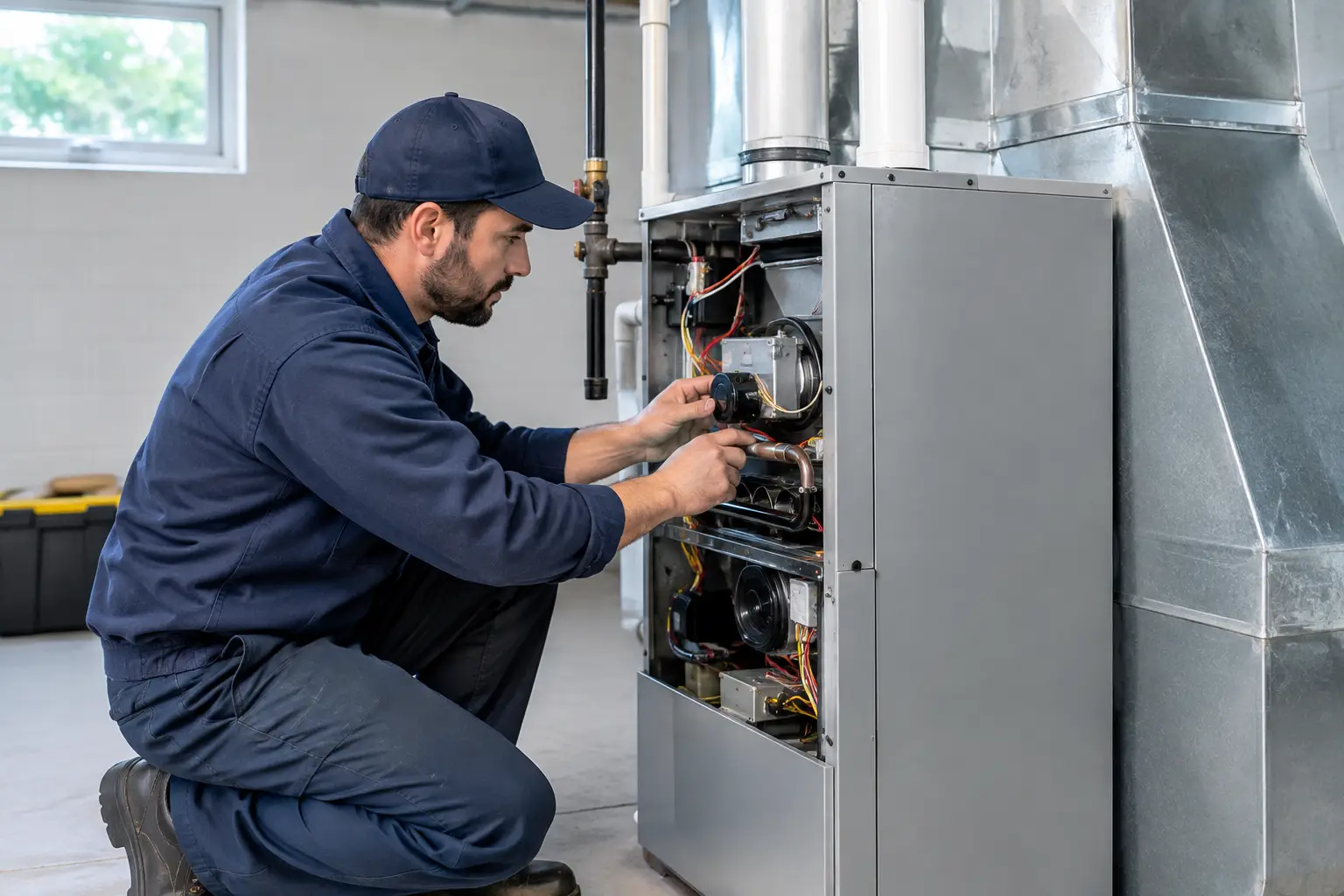
A professional installation also includes correct venting, gas connections, electrical work, condensate drainage when required, startup testing, and safety checks. These details affect efficiency, reliability, and manufacturer warranty requirements. Licensed technicians should verify that the furnace is operating safely before the job is complete.
Furnace Efficiency: What the Numbers Actually Mean
Furnace efficiency is commonly measured by Annual Fuel Utilization Efficiency, or AFUE. An 80% AFUE furnace converts about 80 cents of every fuel dollar into usable heat, while a 95% AFUE model converts about 95 cents under standard testing conditions.
Higher efficiency can reduce fuel use, but it is not automatically the right answer for every property. High-efficiency furnaces generally cost more up front and may require changes to venting and condensate drainage. The value depends on the home, the age of the current furnace, local fuel costs, how long you plan to stay in the property, and the installation requirements.
For some Marstons Mills homes, a standard-efficiency replacement may be the practical fit. For others, particularly homes with high heating demand or a furnace that runs heavily through the season, a high-efficiency model can be a worthwhile long-term investment. A clear estimate should explain the equipment options and the work each option requires so you can compare more than just the initial price.
It can also be a good time to ask about heat pumps and dual-fuel solutions. Modern heat pumps can provide efficient heating and cooling, while a furnace can serve as backup heat when conditions call for it. Whether that approach makes sense depends on the home’s existing setup, comfort goals, electrical capacity, and budget.
Planning Your Furnace Replacement in Marstons Mills, MA
The best time to plan a replacement is before the current furnace stops working entirely. Scheduling an evaluation during milder weather can provide more flexibility in equipment selection and installation timing. It also gives you time to review financing options rather than making a decision under pressure during a cold spell.
Before the appointment, make note of any comfort concerns: rooms that stay cold, unusual sounds, thermostat problems, high utility bills, or times when the furnace has shut down. If you have records of previous repairs, keep those available. This information helps the technician identify whether replacement is the best path and what improvements should be considered with the new system.
Property managers and business owners should take an especially proactive approach. A heating failure can affect tenants, employees, customers, inventory, and operating hours. Planning replacement around occupancy and business schedules helps reduce disruption and allows for a more controlled installation.
Questions Worth Asking Before You Approve the Work
A good replacement proposal should leave you with clear answers. Ask what furnace size is recommended and why, whether the ductwork needs repairs or modifications, what efficiency level is being quoted, and what is included in the installation price. You should also understand the equipment warranty, labor warranty, expected installation timeline, and any maintenance needed to keep the system performing as intended.
If rebates or financing may apply, ask about those options early. Energy-efficiency incentives can change, and eligibility may depend on the equipment selected and how it is installed. Financing can make a necessary replacement easier to manage, but it is still wise to review the full terms and choose a payment approach that fits the household or property budget.
Protecting the Investment After Installation
A new furnace needs regular care to deliver the reliability you paid for. Replace or clean filters on schedule, keep supply and return vents open and unobstructed, and pay attention to changes in sound or performance. Do not store items around the furnace that could interfere with airflow or service access.
Annual professional maintenance remains one of the simplest ways to catch small issues before they interrupt heat. During a tune-up, a technician can inspect safety controls, combustion performance, electrical components, airflow, venting, and other items that affect dependable operation. Maintenance cannot prevent every repair, but it can reduce avoidable strain and help preserve efficiency.
Durfee Plumbing & Heating provides licensed heating service across Cape Cod, with responsive support for repairs, replacements, and heating system concerns. With properly sized equipment, careful installation, and ongoing maintenance, a furnace replacement can become one less thing to worry about when cold weather returns.