A useful plumbing check leaves you with a short record of what changed and what needs attention. For a Cape Cod year-round home, rental or seasonal cottage, start with observations you can make without opening equipment, dismantling plumbing or forcing an old valve.
A repeatable visual inspection
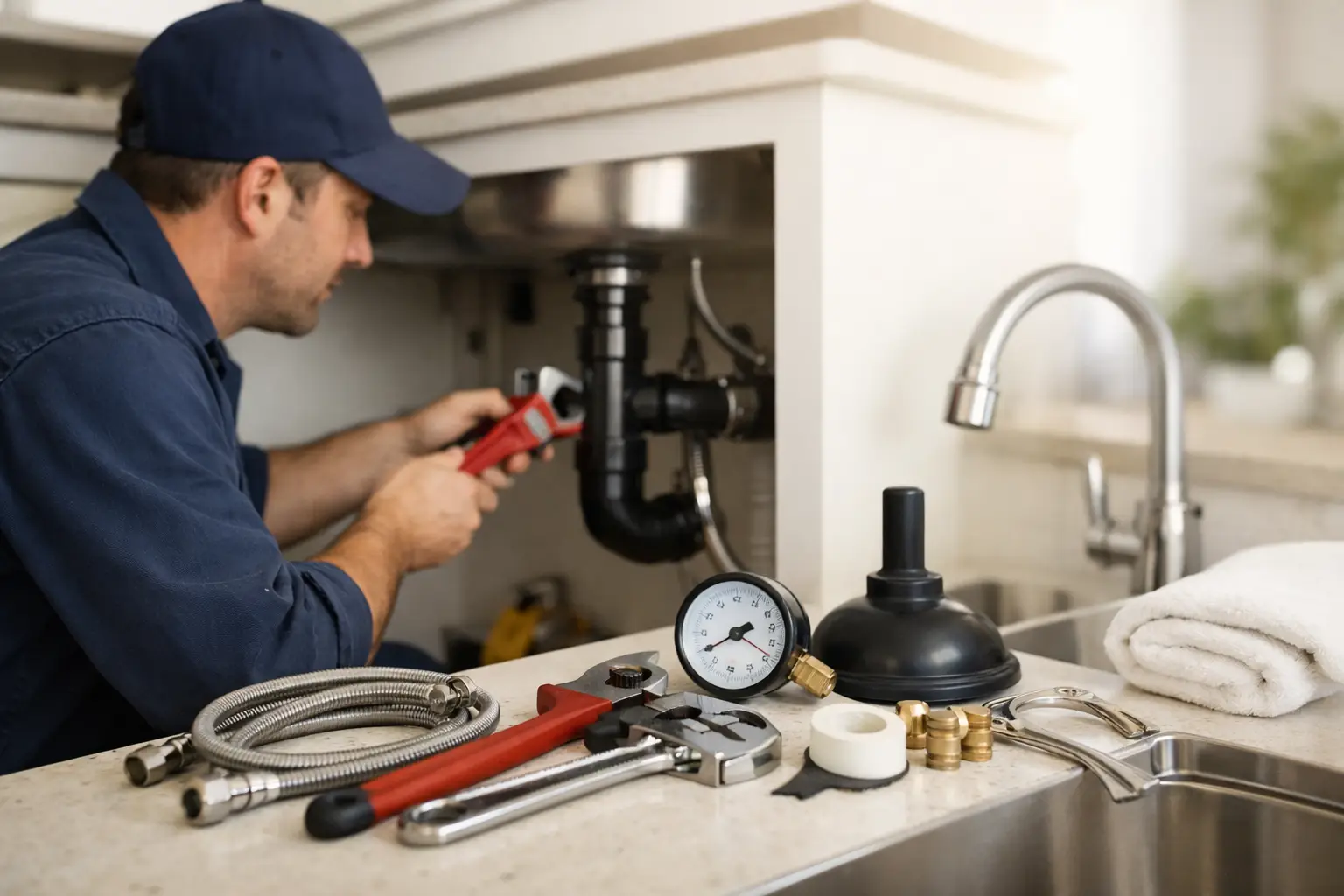
- Under sinks: look for new staining, damp cabinet material, drips and corrosion around visible supplies and drains. Record whether moisture appears while the faucet runs or the sink drains.
- At toilets: note running water after the tank refills, moisture on the floor or movement at the base. Describe the symptom rather than assuming the seal or valve is the cause.
- At the water heater: observe the floor, visible connections and any safely readable display. Photograph the model label if accessible. Note whether all fixtures lose hot water or only one does.
- At appliances: check visible supply hoses and nearby flooring for moisture, bulging or damage. Do not pull out heavy appliances or touch wet electrical equipment to investigate.
- At drains: record whether one fixture is slow or several are backing up. Repeated or shared drain trouble needs a different investigation from a single clogged stopper.
Use water records to spot a change
Compare utility usage over similar occupancy periods. If no fixtures or water-using equipment are operating, an unexplained change in a safely accessible meter reading may warrant a leak investigation. Account for irrigation and appliances before drawing a conclusion. The EPA's WaterSense home-maintenance guidance provides a downloadable checklist and additional leak-checking information.
Before leaving a seasonal home
Write down the closing date, whether heat remains on, which fixtures or appliances stay in use and who has access. Locate the water shutoff and label it if its identity is known; arrange a plumber's review if it is uncertain, seized or leaking. An automatic shutoff does not drain the house or replace a winterization plan.
Discuss outdoor showers, hose connections, crawlspace piping, water heaters and appliances when arranging plumbing winterization. Heating-system protection is a separate part of the closing discussion. At reopening, arrange access and a leak check before guests arrive.
When to call instead of continuing the checklist
Call about active leakage, sewage backup, repeated drain stoppages or a water-heater fault. Keep clear of sewage and water near electricity. If water is escaping and the known shutoff can be reached safely, use it; do not force a stuck valve. For an urgent problem, call (508) 217-7090 to confirm the available response.
Keep this service note
Record the property address and town, date first noticed, affected fixtures, whether water is still flowing, equipment model, photos and the access contact. Include rental or reopening deadlines and who can approve work. That gives the team concrete information for the visit.
Choose plumbing repair, drain cleaning or water-heater service for the relevant next step. Repair estimates require an onsite diagnosis; the team explains the diagnostic fee and applicable credit when booking.