Replacement & installation planning
What a complete evaluation covers.
A system change should explain the equipment, the connections and how the finished result will serve this particular home or building.
01Replacement begins with heat distribution
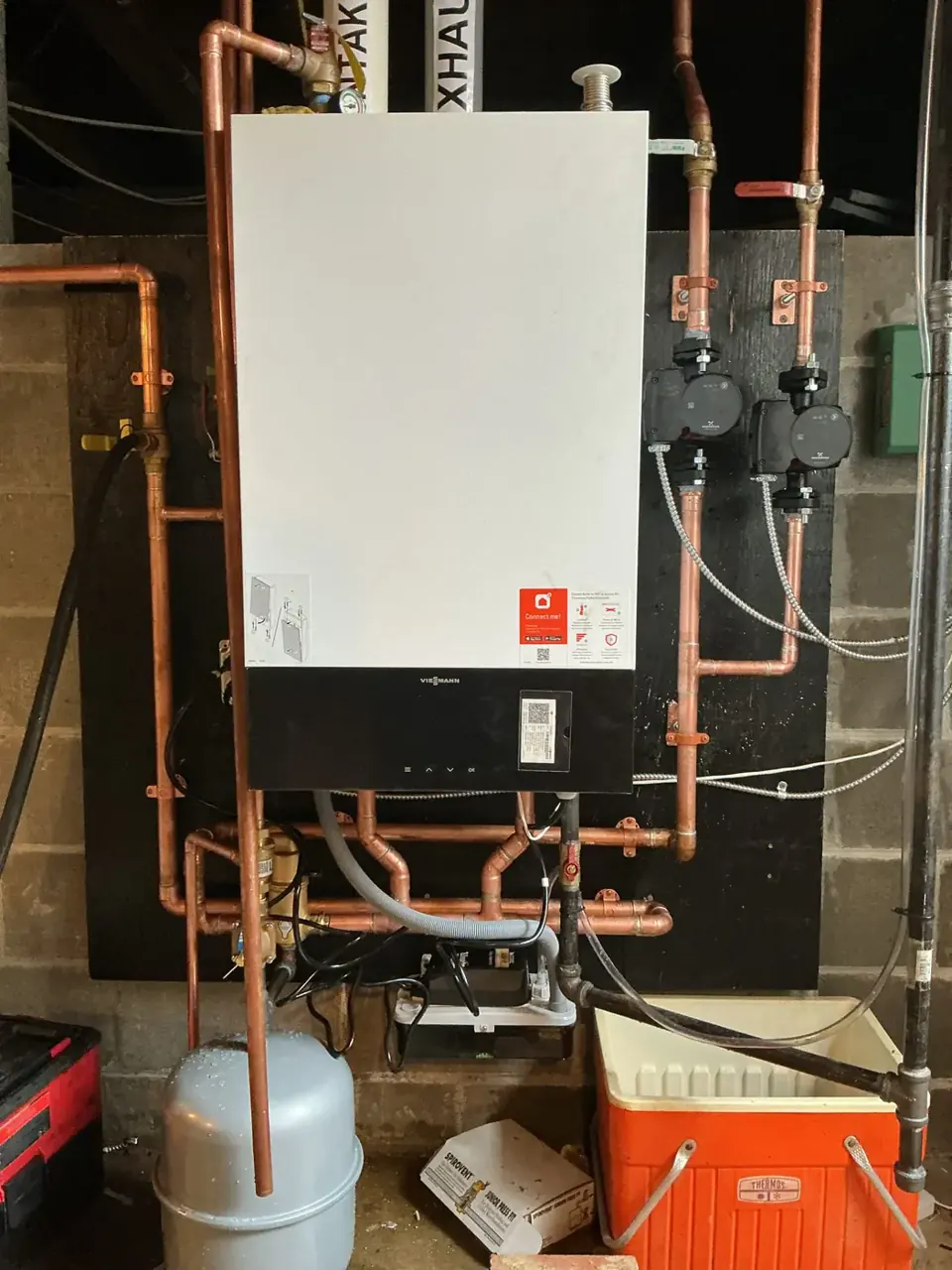
Installing a new boiler without considering the existing hydronic or steam system can leave the same comfort and reliability problems in place. Durfee evaluates accessible piping, baseboard, radiators, pumps, zone valves, expansion components and controls before selecting equipment for a East Dennis property. That review helps identify compatibility work that needs to be planned with the boiler itself.
- Hydronic, steam and radiant-system review
- Zone valves, circulators and control assessment
- Indirect water-heater integration
- Accessible piping and water-quality considerations
02Gas, oil, steam and high-efficiency choices
The right replacement depends on the existing fuel, system type, heat loss, venting options, domestic-hot-water demand and the condition of the distribution system. High-efficiency equipment can offer important benefits when the application supports it, while a steam or oil system needs its own specific evaluation. Durfee explains equipment paths without forcing a one-size-fits-all changeover.
- Gas and oil boiler replacement
- Steam-system replacement planning
- High-efficiency condensing options
- Venting, condensate and combustion requirements
03Controls and zones are part of the comfort result
A new boiler cannot solve an improperly controlled heating system by itself. During replacement planning, Durfee looks at thermostat strategy, zoning, circulator operation, outdoor-reset potential where appropriate and any persistent cold-room complaints. Coordinating these items at installation can produce a more stable, understandable system than replacing only the boiler cabinet.
- Thermostat and zoning review
- Pumps, relays and zone valves
- Indoor comfort and hot-water priorities
- Startup, testing and homeowner walkthrough
04Boiler planning in East Dennis
East Dennis includes historic Route 6A houses, established year-round neighborhoods and coastal properties near Sesuit Harbor and Cape Cod Bay. Mechanical work often involves older hydronic heat, tight chases, finished additions and outdoor equipment exposed to salt air. A useful proposal starts with the existing piping, radiation, electrical capacity, access and preservation priorities—not only the failed component. East Dennis properties include Cape Cod Bay homes, Route 6A properties, historic houses and year-round neighborhoods. Local service needs include older piping, boilers, indirect water heaters, heat pumps and central-air retrofits. We review these conditions when planning equipment access, capacity and installation.
- Repair-versus-replace explanation
- System-aware equipment selection
- Permit and inspection coordination where required
- Clear approved scope before installation
05Route 6A access and finishes in East Dennis
Older framing, plaster, built-ins and finished additions can change the safest route for piping, ductwork and line sets.
- Plan access and work sequencing before installation
- Match equipment and connections to existing conditions
- Explain options before approved work begins
06Hydronic system compatibility in East Dennis
A boiler or heat-pump decision should account for the existing emitters, zone controls, heat loss and domestic-hot-water arrangement.
- Plan access and work sequencing before installation
- Match equipment and connections to existing conditions
- Explain options before approved work begins