Repair, replacement & planning
What a complete evaluation covers.
Before work begins, we review equipment sizing, existing connections, access and the steps needed to start up and test the finished system.
01Replacement begins with heat distribution
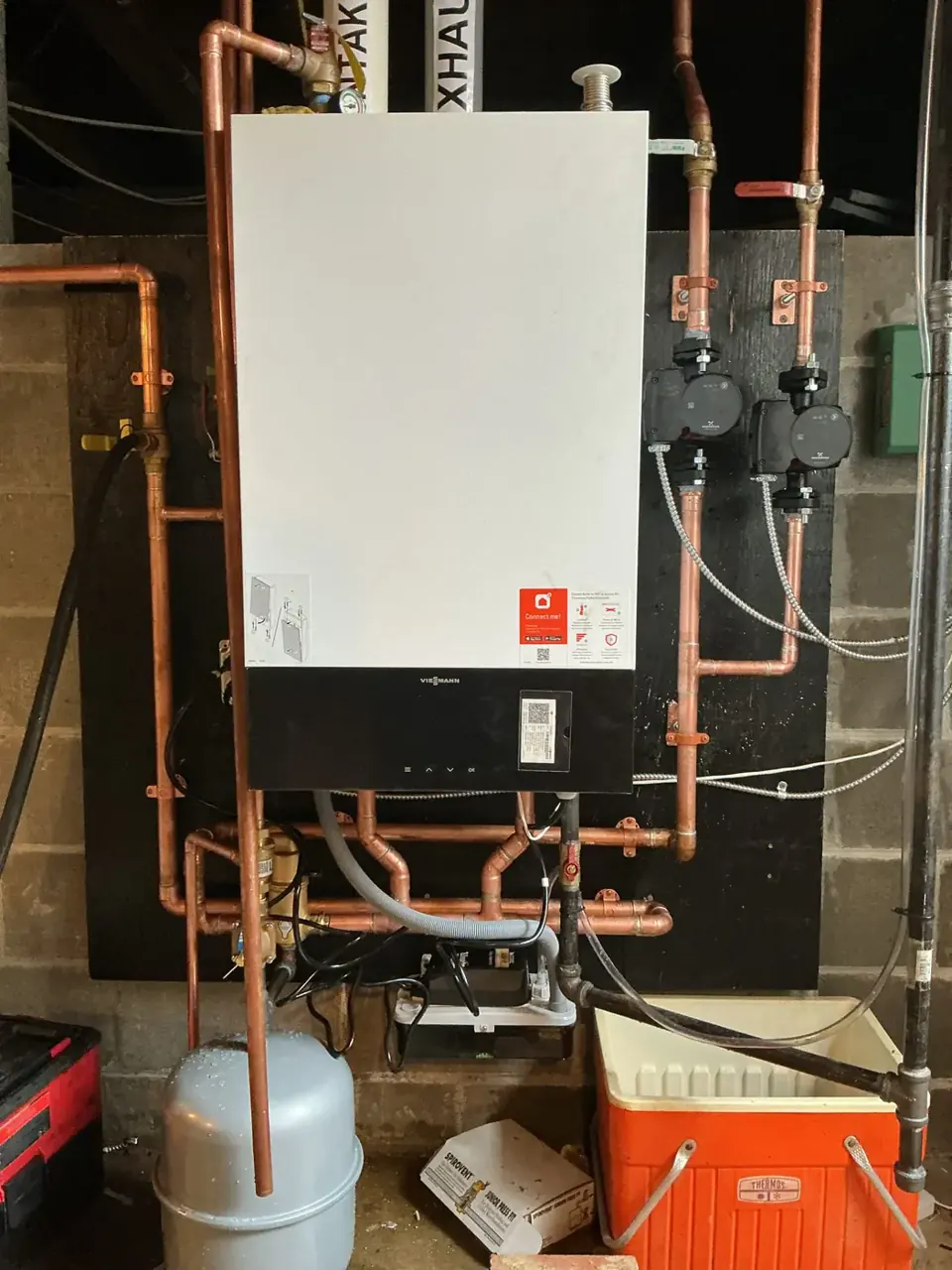
Installing a new boiler without considering the existing hydronic or steam system can leave the same comfort and reliability problems in place. Durfee evaluates accessible piping, baseboard, radiators, pumps, zone valves, expansion components and controls before selecting equipment for a Truro property. That review helps identify compatibility work that needs to be planned with the boiler itself.
- Hydronic, steam and radiant-system review
- Zone valves, circulators and control assessment
- Indirect water-heater integration
- Accessible piping and water-quality considerations
02Gas, oil, steam and high-efficiency choices
The right replacement depends on the existing fuel, system type, heat loss, venting options, domestic-hot-water demand and the condition of the distribution system. High-efficiency equipment can offer important benefits when the application supports it, while a steam or oil system needs its own specific evaluation. Durfee explains equipment paths without forcing a one-size-fits-all changeover.
- Gas and oil boiler replacement
- Steam-system replacement planning
- High-efficiency condensing options
- Venting, condensate and combustion requirements
03Controls and zones are part of the comfort result
A new boiler cannot solve an improperly controlled heating system by itself. During replacement planning, Durfee looks at thermostat strategy, zoning, circulator operation, outdoor-reset potential where appropriate and any persistent cold-room complaints. Coordinating these items at installation can produce a more stable, understandable system than replacing only the boiler cabinet.
- Thermostat and zoning review
- Pumps, relays and zone valves
- Indoor comfort and hot-water priorities
- Startup, testing and homeowner walkthrough
04Boiler planning in Truro
Truro's dispersed homes, private roads, steep sites, National Seashore land and exposed ocean and bay settings demand careful access and equipment planning. Truro properties include seasonal cottages, year-round homes, rental turnovers, private-well properties and coastal HVAC equipment. Truro has a small year-round population and a substantial seasonal housing supply spread across a long, rural town. Properties can be difficult to reach, far from a caretaker and highly exposed to wind and salt. A reliable plan starts with accurate directions, occupancy information, utility details and photographs before equipment or labor is committed. We review these conditions when planning equipment access, capacity and installation.
- Repair-versus-replace explanation
- System-aware equipment selection
- Permit and inspection coordination where required
- Clear approved scope before installation
05Drive and stair access in Truro
Equipment delivery can be a project constraint on steep, sandy or narrow sites; photographs help identify it early.
- Plan access and work sequencing before installation
- Match equipment and connections to existing conditions
- Explain options before approved work begins
06Wind and salt in Truro
Outdoor-unit supports, fasteners, coils and terminations need closer inspection in exposed locations.
- Plan access and work sequencing before installation
- Match equipment and connections to existing conditions
- Explain options before approved work begins