Repair, replacement & planning
What a complete evaluation covers.
Before work begins, we review equipment sizing, existing connections, access and the steps needed to start up and test the finished system.
01Heat-pump design begins with the building load
A heat pump should be selected for the actual heating and cooling demands of the Truro property. Existing equipment size is a useful reference, but it may not reflect insulation upgrades, additions, duct limitations or historic oversizing. Durfee reviews the relevant conditions before recommending capacity, system type and a backup strategy.
- Heating and cooling load review
- Ducted, ductless and hybrid options
- Electrical-service and control requirements
- Room-by-room comfort concerns
02Ducted, ductless or dual-fuel
Many homes can use more than one heat-pump approach. A ducted system may build on usable distribution; a ductless system may suit additions or homes without ducts; and a dual-fuel design may retain a serviceable furnace as low-temperature backup. The best route is determined by access, comfort goals, fuel strategy, equipment condition and budget.
- Whole-home ducted heat pumps
- Ductless zones and additions
- Heat pump plus furnace backup
- Existing boiler or central-air coordination
03Outdoor equipment placement affects long-term performance
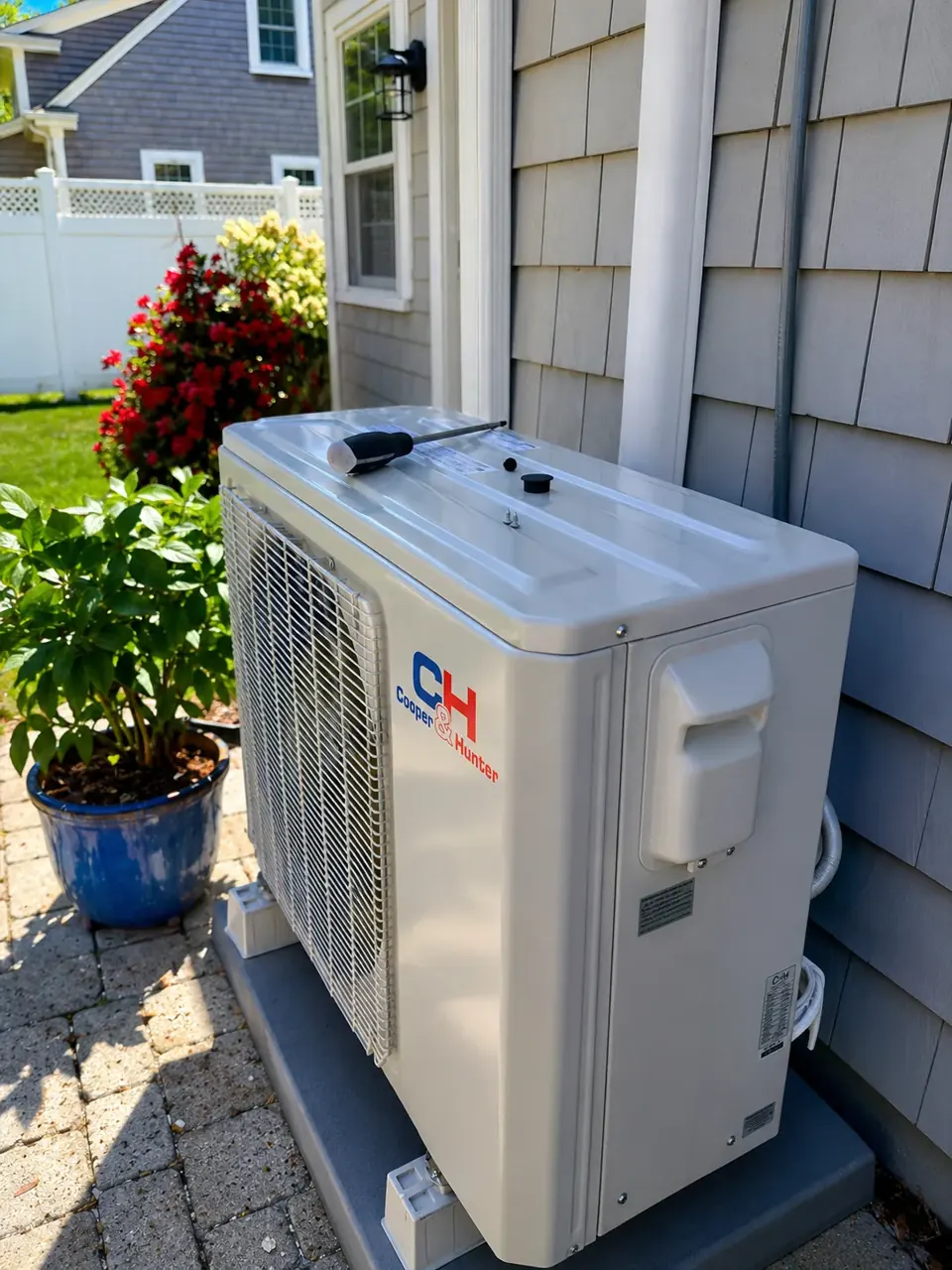
The outdoor unit needs a stable, serviceable location with clearance for weather, drainage and airflow. Durfee considers site access, snow management, condensate, sound, line-set routing and exposure before finalizing the installation. This planning is especially important for reliable winter operation and routine service.
- Support, drainage and weather clearance
- Airflow and maintenance access
- Sound and placement considerations
- Line-set, electrical and condensate routing
04Heat-pump planning in Truro
Truro's dispersed homes, private roads, steep sites, National Seashore land and exposed ocean and bay settings demand careful access and equipment planning. Truro properties include seasonal cottages, year-round homes, rental turnovers, private-well properties and coastal HVAC equipment. Truro has a small year-round population and a substantial seasonal housing supply spread across a long, rural town. Properties can be difficult to reach, far from a caretaker and highly exposed to wind and salt. A reliable plan starts with accurate directions, occupancy information, utility details and photographs before equipment or labor is committed. We review these conditions when planning equipment access, capacity and installation.
- Cold-climate equipment selection
- Comfort and backup-heat planning
- Mass Save documentation guidance where applicable
- Professional startup and owner walkthrough
05Drive and stair access in Truro
Equipment delivery can be a project constraint on steep, sandy or narrow sites; photographs help identify it early.
- Plan access and work sequencing before installation
- Match equipment and connections to existing conditions
- Explain options before approved work begins
06Wind and salt in Truro
Outdoor-unit supports, fasteners, coils and terminations need closer inspection in exposed locations.
- Plan access and work sequencing before installation
- Match equipment and connections to existing conditions
- Explain options before approved work begins