Replacement & installation planning
What a complete evaluation covers.
A system change should explain the equipment, the connections and how the finished result will serve this particular home or building.
01Heat-pump design begins with the building load
A heat pump should be selected for the actual heating and cooling demands of the Onset property. Existing equipment size is a useful reference, but it may not reflect insulation upgrades, additions, duct limitations or historic oversizing. Durfee reviews the relevant conditions before recommending capacity, system type and a backup strategy.
- Heating and cooling load review
- Ducted, ductless and hybrid options
- Electrical-service and control requirements
- Room-by-room comfort concerns
02Ducted, ductless or dual-fuel
Many homes can use more than one heat-pump approach. A ducted system may build on usable distribution; a ductless system may suit additions or homes without ducts; and a dual-fuel design may retain a serviceable furnace as low-temperature backup. The best route is determined by access, comfort goals, fuel strategy, equipment condition and budget.
- Whole-home ducted heat pumps
- Ductless zones and additions
- Heat pump plus furnace backup
- Existing boiler or central-air coordination
03Outdoor equipment placement affects long-term performance
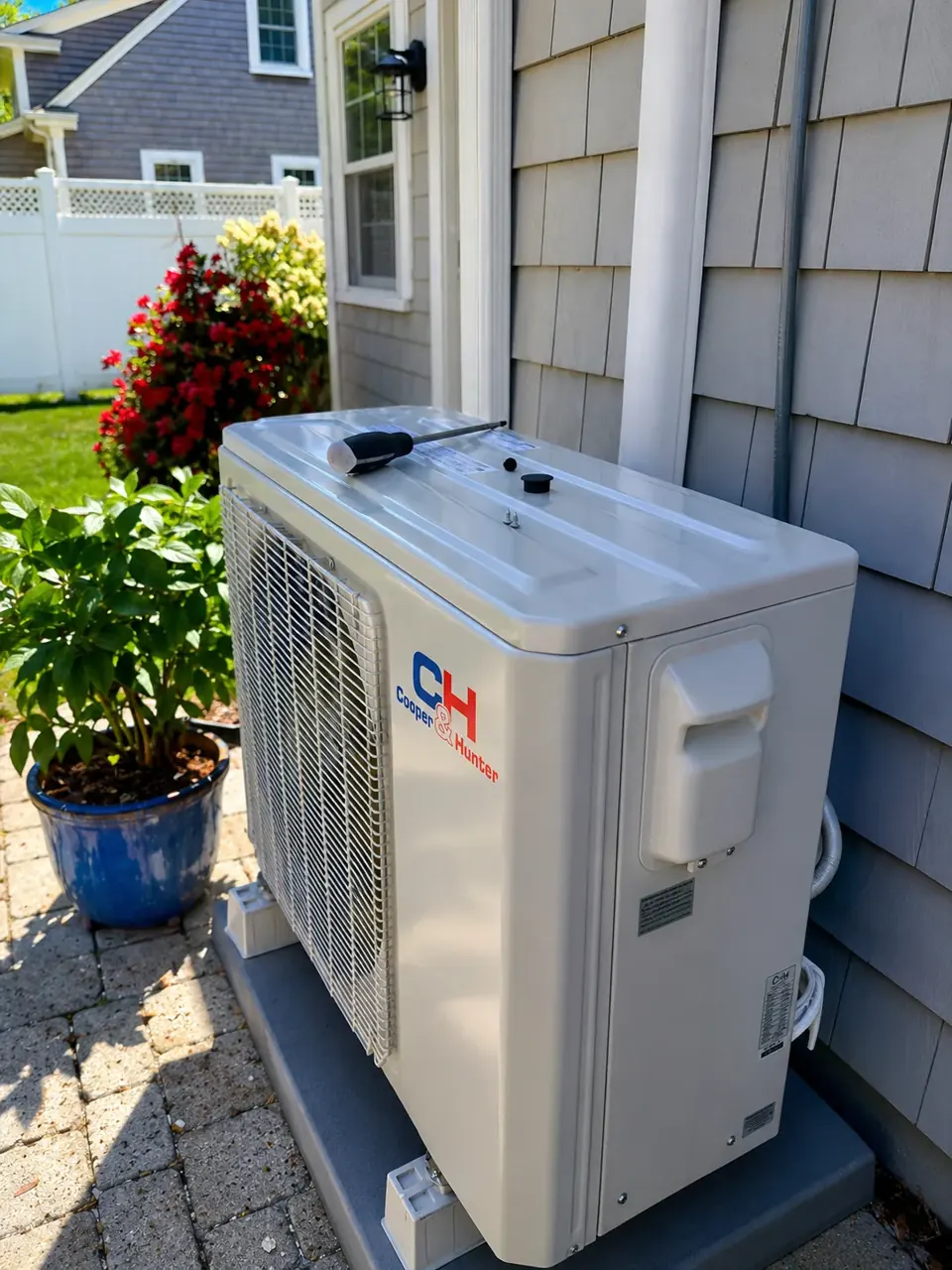
The outdoor unit needs a stable, serviceable location with clearance for weather, drainage and airflow. Durfee considers site access, snow management, condensate, sound, line-set routing and exposure before finalizing the installation. This planning is especially important for reliable winter operation and routine service.
- Support, drainage and weather clearance
- Airflow and maintenance access
- Sound and placement considerations
- Line-set, electrical and condensate routing
04Heat-pump planning in Onset
Onset's historic village includes compact cottages, waterfront homes, seasonal rentals and buildings with limited mechanical space. Spring openings and fall shutdowns can reveal leaks, failed valves, slow drains and equipment corrosion. When access is tight, repair and replacement decisions should consider routing, future service clearance and how the property is occupied throughout the year. Onset properties include historic cottages, waterfront homes, seasonal rentals and compact village properties. Local service needs include winterization, drain service, water heaters, mini-splits and corrosion-aware HVAC. We review these conditions when planning equipment access, capacity and installation.
- Cold-climate equipment selection
- Comfort and backup-heat planning
- Mass Save documentation guidance where applicable
- Professional startup and owner walkthrough
05Opening-day leak checks in Onset
Water should be restored methodically so failed valves, split piping and winter damage are found before they affect finishes or neighboring areas.
- Plan access and work sequencing before installation
- Match equipment and connections to existing conditions
- Explain options before approved work begins
06Tight equipment access in Onset
Compact utility spaces require clear planning for venting, drainage, combustion air, electrical work and future maintenance.
- Plan access and work sequencing before installation
- Match equipment and connections to existing conditions
- Explain options before approved work begins